
In many factories, a well-designed manual programmer or offline programming system can deliver an ideal balance between speed, stability, and investment control. Instead of committing too early to full automation, manufacturers can use multi-socket manual programming platforms to support MCU, eMMC, NAND/NOR Flash, and increasingly UFS 4.1 devices while keeping production scalable.
This guide explains how Manual Programmers work, why they remain important in modern semiconductor production, how to evaluate programming speed and stability, and how to combine them with ATE to achieve high efficiency at a lower overall cost.
1. What Are Manual Programmers?
2. Why Manual Programmers Still Matter in Modern Production
3. Key Technical Criteria for Choosing Manual Programmers
4. Programming Speed, Socket Parallelism, and Real Throughput
5. Programming Stability, Yield, and Traceability
6. Manual Programmers vs Online / In-System Programming
7. How to Use Manual Programmers with ATE for Lower-Cost High Efficiency
8. Best Use Cases for EMS, Automotive Electronics, and OEMs
9. Buyer’s Checklist for Evaluating Manual Programmers
10. Why Choose VeloMax for Manual Programming Solutions?
Manual Programmers are offline IC programming systems in which an operator manually loads and unloads semiconductor devices into sockets, while the system automatically performs programming, verification, and process logging.
They are widely used in semiconductor manufacturing because they provide strong flexibility without the higher complexity and capital expense of fully automated programming cells. In practical factory environments, manual programmers are used for:
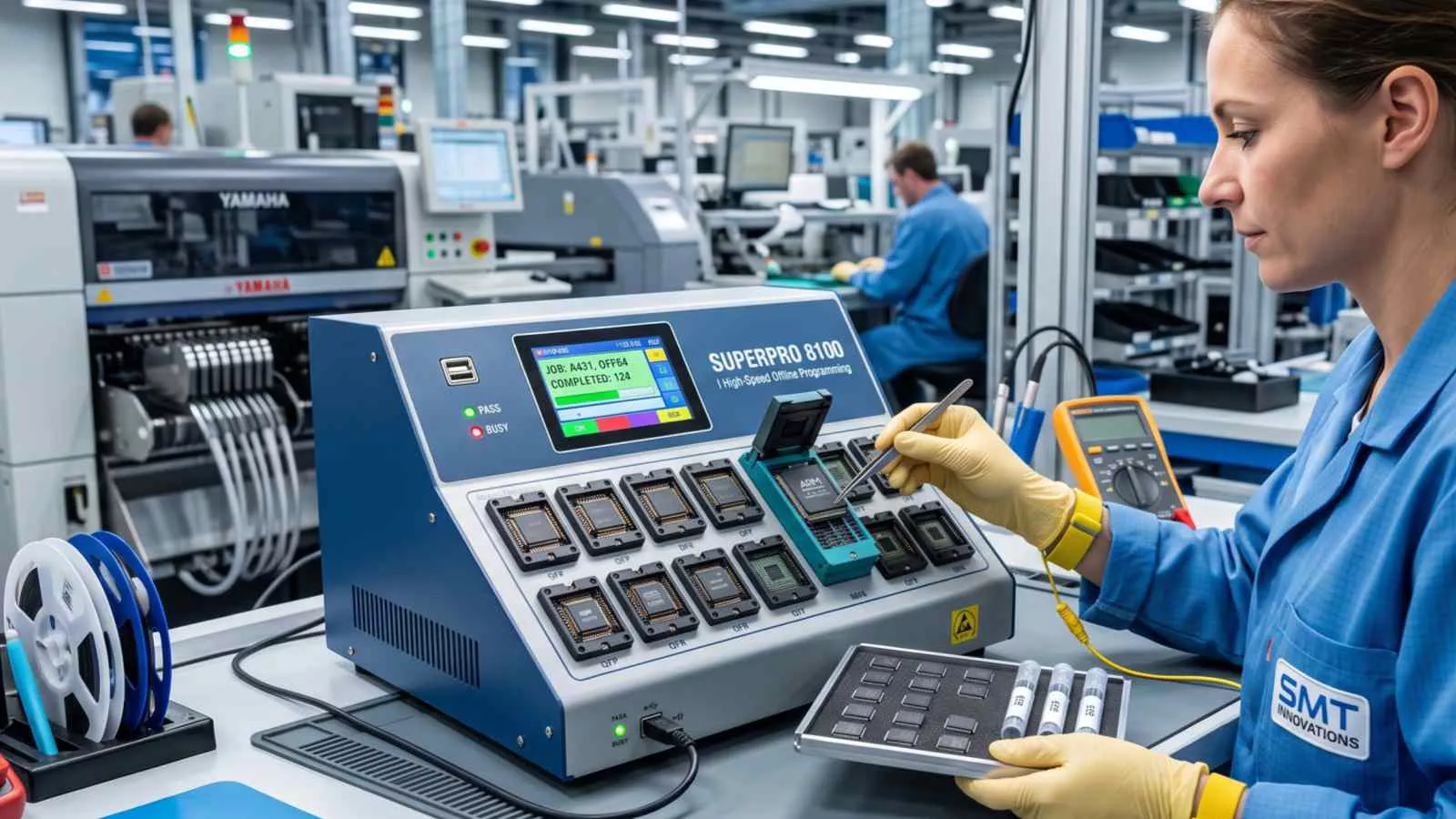
Unlike board-level online programming, offline manual programming allows chips to be programmed before assembly or before final integration into the production line. This reduces line disruption, simplifies version control, and can improve overall production efficiency.
For companies looking for flexible solutions, Offline IC Programming Solutions often provide a practical foundation for both current orders and future expansion.
Many buyers assume that full automation is always the best direction. In reality, production conditions are often more complex. Factories may face frequent model changes, multiple customer projects, uncertain order volumes, and recurring firmware updates.
Under these conditions, Manual Programmers remain highly valuable because they help manufacturers control investment while still achieving fast, stable, and scalable chip programming.
A manual programming system usually requires significantly less investment than a fully automated loader-based programming line. This is particularly useful for EMS factories and OEMs that need production flexibility.
Manual programmers can be introduced faster, qualified faster, and switched between projects more easily. This makes them ideal for engineering changes, pilot runs, and customer-specific jobs.
Factories can start with a smaller socket count and expand later as volume grows. Instead of overbuying automation too early, buyers can scale production in practical steps.
For manufacturers handling different package types, multiple firmware versions, or multiple customer programs, a good manual programmer often provides the best balance of changeover speed and process control.
Choosing the right Manual Programmers requires more than checking a device support list. Buyers should evaluate whether the platform can support current products, future device migration, stable multi-socket performance, and integration with broader factory workflows.
The first requirement is compatibility with your production roadmap. A reliable system should support a wide range of semiconductor devices and package options while also allowing future expansion.
For advanced projects, buyers increasingly ask whether the platform can support UFS 4.1. This matters because storage performance expectations continue to rise in automotive, edge computing, and high-performance embedded applications. Related product planning should also consider UFS Programming Technology and long-term device roadmap alignment.
Manual programming is not only a hardware question. Software capability determines whether the system can prevent file mismatch, manage recipes correctly, and protect customer data.
A technically strong programmer is not enough if it does not fit the production floor. Buyers should evaluate loading ergonomics, socket replacement method, maintenance convenience, and operator training requirements.
If your team is comparing device compatibility, socket counts, or UFS/MCU programming requirements, our engineering team can help map your production goals to the right platform architecture.
Contact UsFor B2B buyers, programming speed should never be judged only by a single benchmark number. What matters is real throughput across a full production shift, with stable yield and minimal interruption.
Actual output depends on more than interface bandwidth. Several practical factors affect cycle time and capacity:
One of the biggest strengths of modern Manual Programmers is multi-socket parallel programming. A system with 4, 8, 16, or more sockets can dramatically increase output when power delivery, signal integrity, and job scheduling remain stable.
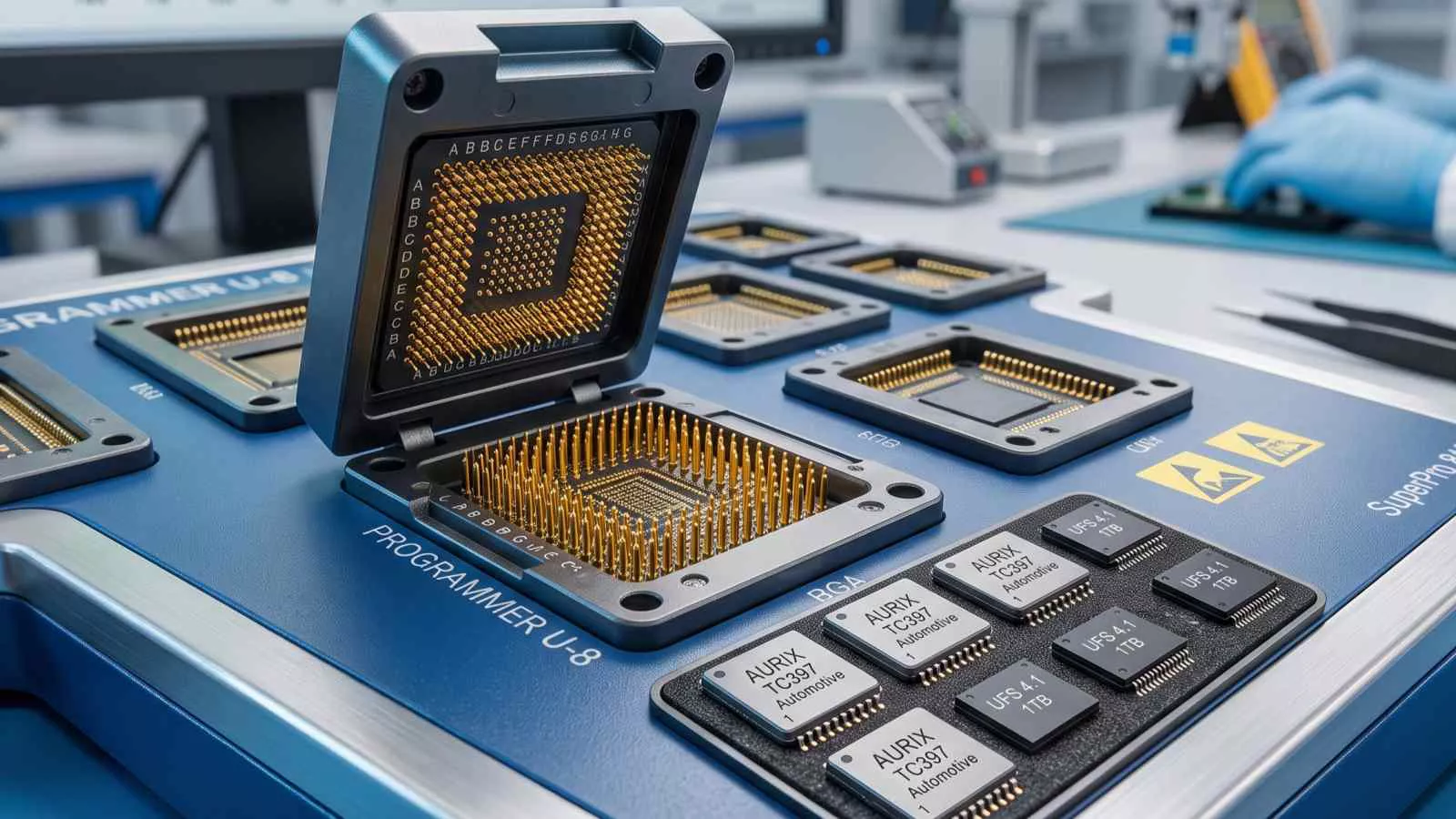
However, buyers should not focus only on socket count. The better questions are:
| Evaluation Item | What Buyers Should Check | Why It Matters |
|---|---|---|
| Raw programming speed | Write and verify time per device | Determines baseline cycle capability |
| Multi-socket operation | Full-load performance with all sockets active | Shows whether scaling is real or only theoretical |
| Operator handling time | Loading/unloading efficiency and ergonomics | Directly affects real units per hour |
| UFS 4.1 / MCU support | Protocol and device roadmap compatibility | Prevents early platform obsolescence |
| Socket maintenance | Replacement time, life cycle, and stability | Reduces downtime and ongoing cost |
A strong programming platform should deliver not only high peak speed, but also stable output under full daily production conditions.
In semiconductor production, stability is often more important than the highest advertised speed. A programmer that fails intermittently can create rework, delay downstream operations, and damage customer confidence.
Stable programming improves:
Modern EMS providers and automotive electronics manufacturers increasingly require detailed production records. A capable manual programming platform should support:
For operations that need tighter process visibility, it is valuable to evaluate ATE Integration for Semiconductor Production together with programming data management.
Many manufacturers compare offline manual programming with online or in-system programming. Each method has value, but the right choice depends on production volume, product mix, line takt time, quality requirements, and available budget.
| Factor | Manual Programmers | Online / In-System Programming |
|---|---|---|
| Initial investment | Lower and easier to scale step by step | Often higher due to fixtures and line integration |
| Flexibility | High for mixed models and multiple customers | Better for stable, standardized products |
| Changeover speed | Fast and practical | Depends on line setup and fixture changes |
| Impact on SMT / test line | Low | Higher because programming occurs on the board path |
| Traceability control | Strong when software logging is enabled | Strong if fully integrated, but more complex |
| Best fit | EMS, automotive electronics, NPI, scalable production | Very stable, high-volume board-level production |
For many B-end buyers, offline manual programming provides better process isolation. Chips can be programmed, verified, and tracked before they enter downstream assembly or board test operations, reducing the risk of wasting high-value production time.
One of the most attractive production models today is a hybrid workflow that combines Manual Programmers with ATE. This approach can deliver high efficiency without requiring immediate investment in a fully automated programming cell.
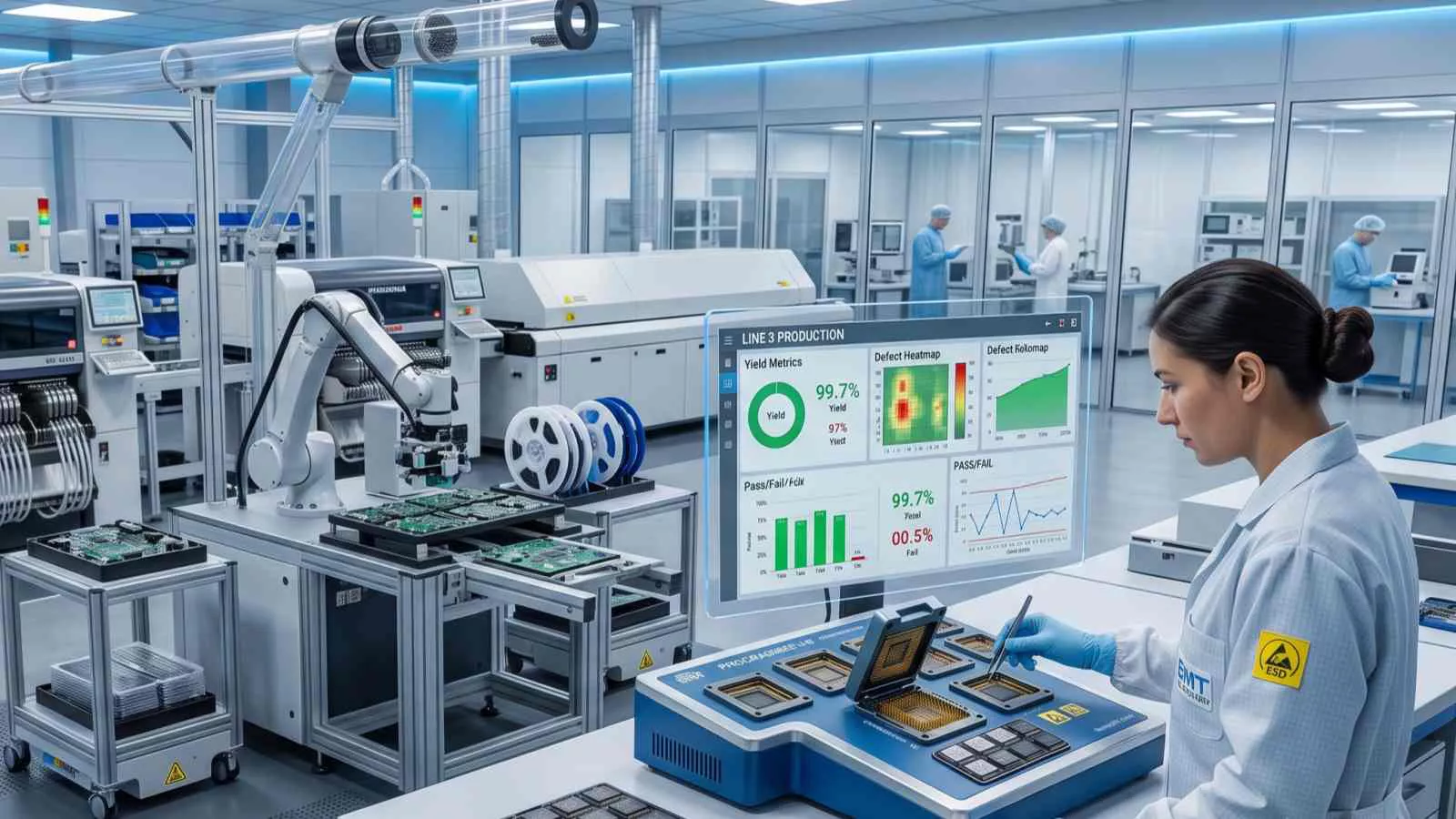
For factories seeking a balance between performance and investment control, the combination of offline programming and ATE often offers one of the most efficient production structures available.
EMS companies often support many customers, multiple SKUs, and different device families. They need flexible job switching, secure customer file management, and scalable throughput. Manual programmers fit this environment especially well because they simplify project transitions while maintaining process control.
Automotive production demands strong traceability, stable quality, and reliable long-run performance. Manual programmers are well suited for ECU-related MCU programming, memory programming, and version-controlled processes that need strict logging and first-pass yield discipline.
OEMs launching new products often want a lower-risk path from NPI to mass production. Manual programmers allow them to start with a right-sized investment and scale upward only when demand becomes stable.
For applications requiring faster storage devices, support for UFS technology can become a key selection point. Buyers should confirm protocol support, verification strategy, and full-load performance before standardizing on a platform.
Before requesting a formal quotation, production teams should use a structured checklist to compare equipment options.
Compare your current output targets, device roadmap, and traceability requirements before selecting a programming platform. A good decision today can avoid costly process redesign later.
Talk to Our Team
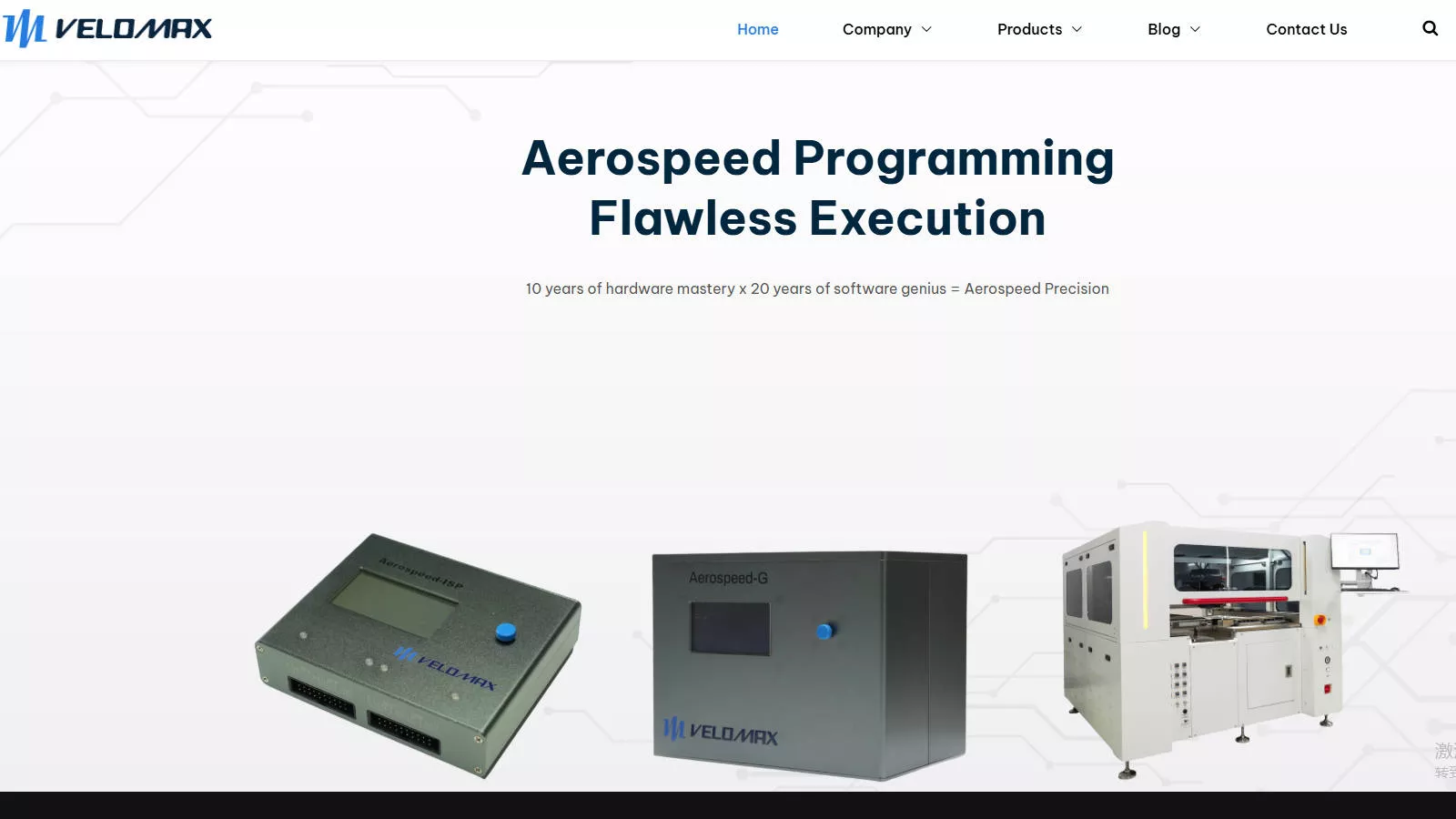
For manufacturers looking for a practical and scalable approach to chip programming, VeloMax provides high-speed programming solutions designed for real production demands.
VeloMax focuses on programming technologies that support advanced semiconductor applications, including MCU, NOR Flash, NAND Flash, eMMC, and UFS. For factories that need production flexibility without overcommitting to full automation, manual and offline programming platforms can offer an effective path to higher output and better quality control.
VeloMax solutions are designed with attention to:
If your factory is currently comparing manual programming options, you can also review Manual Programmer product solutions and evaluate whether the platform architecture matches your production goals.
Manual Programmers continue to play an essential role in modern semiconductor production because they offer a strong balance between speed, stability, scalability, and cost control. For EMS providers, automotive electronics manufacturers, and OEM production managers, the best programming solution is not simply the one with the highest advertised speed. It is the one that can reliably support your devices, maintain output across multiple sockets, deliver traceable results, and fit naturally into your broader production process.
When evaluating a platform, focus on the real buying criteria: device compatibility, UFS 4.1 and MCU support, multi-socket throughput, socket stability, software control, and ATE integration readiness. A well-chosen manual programming solution can reduce programming risk, improve quality, and build a practical foundation for long-term production growth.
If your next step is equipment selection, process optimization, or platform comparison, visit Contact Our Team for Programming System Selection to discuss your production requirements in more detail.
Our technical team is available to help you evaluate your requirements and recommend the optimal programming solution for your production environment. Contact VeloMax today to start the conversation.
Contact UsA Manual Programmer is an offline chip programming system where operators manually load semiconductor devices into sockets while the system performs programming, verification, and logging automatically.
Yes. With multi-socket parallel operation and scalable deployment, Manual Programmers can support high-throughput production efficiently, especially in EMS and mixed-model manufacturing environments.
Advanced systems may support both UFS 4.1 and MCU devices, but buyers should always confirm exact device lists, package compatibility, and production-level performance before purchase.
They can be integrated through barcode workflows, serial number synchronization, pass/fail data exchange, and centralized record management, helping manufacturers connect chip programming with board-level test data.
They are ideal when production volume is growing, product mix changes frequently, budget must be controlled, or the factory needs fast deployment and flexible scaling.
Discover this amazing content and share it with your network!
Your Name*
Your Email*


*We respect your confidentiality and all information are protected.
