
As IC production moves toward higher volumes and shorter production cycles, programming efficiency has become increasingly important. For small production runs, manual or standalone programming may be sufficient. For high-volume manufacturing, however, programming needs to become part of a coordinated production process.
An automated programming system combines IC programming with automated handling and related production operations to reduce manual intervention and maintain consistent output. Depending on the configuration, an automated IC programming system can integrate programming, verification, inspection, marking, sorting, and repacking within one integrated workflow.
For manufacturers, the key question is not simply how fast an IC can be programmed. The more important consideration is whether the complete system can deliver the required throughput, accuracy, device compatibility, and traceability under real production conditions. This guide explains how automated programming systems support high-speed IC manufacturing, what affects system throughput, and which factors procurement teams should evaluate before selecting equipment.
2. What Is an Automated Programming System?
3. Why High-Speed IC Manufacturing Requires Automation
4. How Does an Automated Programming System Work?
5. What Determines Automated Programming System Throughput?
6. What IC Devices and Packages Can an Automated Programming System Support?
7. How to Choose an Automated Programming System
8. Automated Programming System vs. Manual Programming
9. When Should Manufacturers Invest in an Automated Programming System?
10. VeloMax Automated Programming Systems for High-Speed IC Manufacturing
11. Frequently Asked Questions
This guide is based on VeloMax's experience in high-speed IC programming and automated semiconductor handling. VeloMax develops programming and automation solutions for devices including UFS, eMMC, Flash, and MCUs, with the AST Series combining programming with functions such as inspection, marking, handling, and repacking.
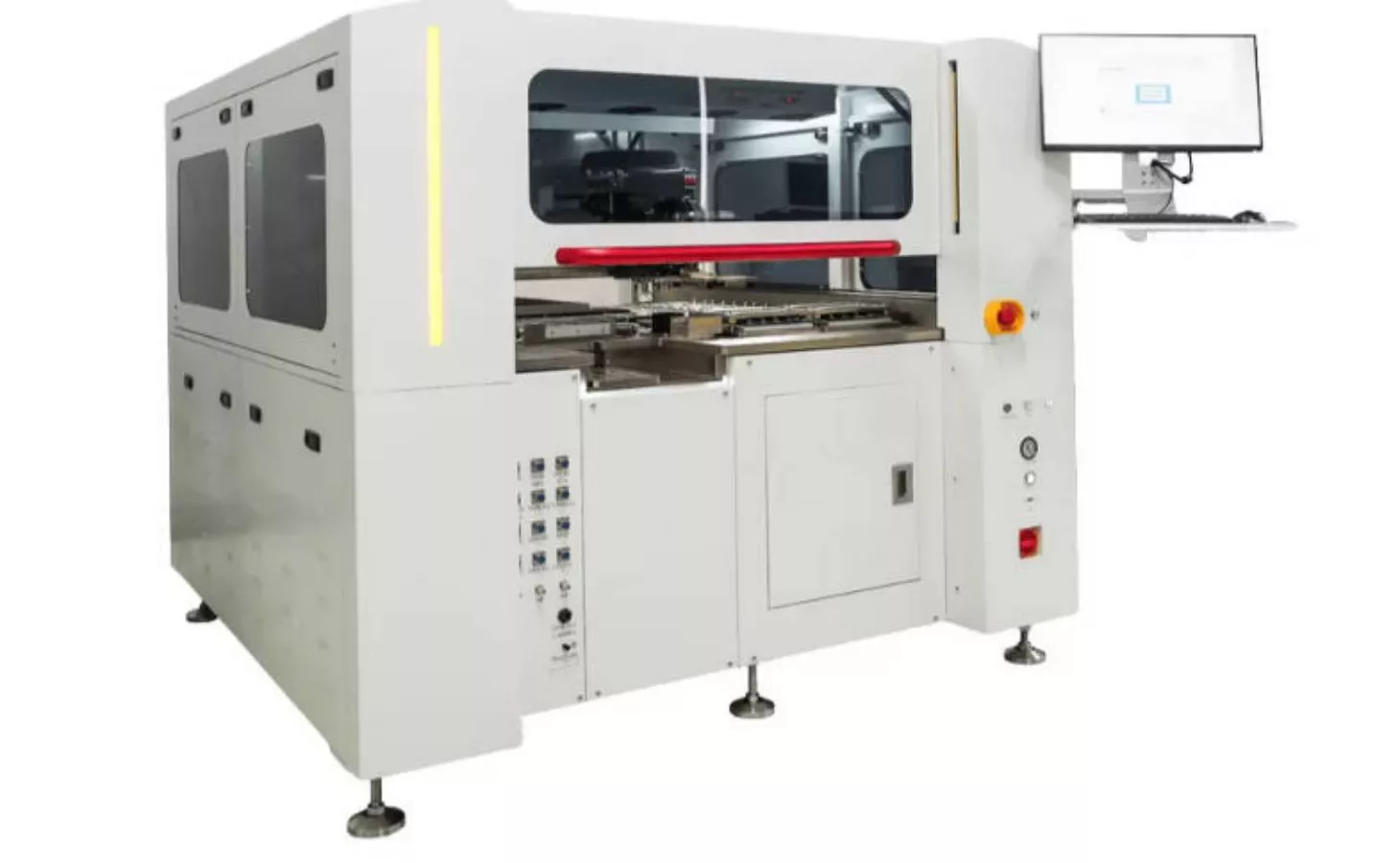
An automated programming system is an integrated production solution that programs IC devices while automating the handling and related manufacturing operations around the programming process.
A standalone programmer primarily performs the programming operation. An automated system extends this process by coordinating functions such as:
The exact configuration depends on the device, package, production volume, and factory requirements.
For this reason, an automated programming system should be considered more than an automated IC programmer. It is a production-oriented system designed to connect programming with material handling and quality-control processes.
High-speed IC manufacturing places different demands on programming equipment than prototype or low-volume production. As production volume increases, repetitive manual operations can become a bottleneck even when the programming process itself is relatively straightforward.
High-volume production requires manufacturers to process large quantities of devices within predictable production windows.
With manual programming, operators may need to repeatedly load components, initiate programming cycles, remove completed devices, verify results, and sort them. Increasing output can therefore require additional operators or programming stations.
Automation coordinates these repetitive operations within one production workflow, allowing manufacturers to increase processing capacity without relying entirely on additional manual labor.
Production consistency becomes increasingly important as batch sizes grow.
Manual handling can introduce variations in positioning, loading, unloading, and inspection. An automated system uses predefined machine operations to perform these tasks in a repeatable sequence.
This is particularly useful when manufacturers process large quantities of identical devices or work with packages requiring precise positioning.
IC devices may pass through several stages before reaching final output. Every manual transfer creates another opportunity for:
Automated material handling reduces unnecessary intervention between production stages.
Programming is not always the final manufacturing step. Depending on the application, programmed devices may also require verification, optical inspection, marking, sorting, or repacking.
Performing these operations separately can introduce additional handling and production delays. An automated programming system can combine multiple stages into a connected workflow, reducing unnecessary transfers between machines.
High-volume electronics manufacturing increasingly requires production data to be recorded and traceable.
Depending on the configuration, an automated programming system can work with device identification, programming results, inspection information, and production records. For factories implementing advanced production management, full MES integration can also support seamless communication between programming equipment and the wider smart factory environment.
The result is a programming process that can be monitored and managed at production scale.
An automated programming system connects IC handling, programming, inspection, and output operations into a coordinated production sequence.
A typical workflow is:
Not every application requires all of these stages. The system can be configured according to device type, production volume, package, and quality requirements.
Production begins with loading IC devices into the system. Depending on the application, components may be supplied in trays, tubes, or tape. The handling system transfers devices from the input area to the appropriate programming position.
The handling mechanism positions each device accurately in the programming area. This becomes particularly important for compact packages such as BGA, WLCSP, CSP, QFN, and other high-density formats.
Once devices are positioned, multiple ICs can be programmed in parallel according to the system configuration. Parallel processing increases production capacity by allowing several devices to be handled during overlapping programming cycles.
After programming, devices can undergo programming verification and, where required, automated optical inspection. Programming verification confirms whether the programming operation has completed successfully.
Depending on the application, programmed devices may need to be marked, classified, sorted, or returned to a specified packaging format. Automating these operations can reduce downstream manual handling and maintain a more continuous production flow.
For high-speed IC manufacturing, UPH (units per hour) is often more useful than programming speed alone when evaluating production capacity. A faster programmer is not necessarily a faster production system. Actual output depends on the performance of the complete production cycle.
Programming time depends on factors such as device type, data size, programming algorithm, and operating conditions. Reducing programming time can improve capacity, but only when the other stages can keep pace.
Multiple programming sites allow several devices to be processed simultaneously. However, procurement teams should evaluate effective system capacity rather than socket count alone.
Parallelism is one of the main technologies behind high-throughput automated programming. Instead of waiting for one device to complete every stage before starting the next, the system can coordinate multiple devices at different stages of production.
Pick-and-place movement, loading, unloading, positioning, and transfer operations all consume time. If the handler is slower than the programming process, additional programming capacity may not translate into higher finished output.
Inspection, marking, sorting, and repacking can also influence final production capacity. Therefore, manufacturers should compare system-level throughput, not simply the rated speed of individual programming hardware.
Technical Note: Actual throughput can vary according to device type, programming data, socket configuration, handling cycle, inspection requirements, and production conditions. Published UPH should therefore be treated as a reference rather than a guaranteed output for every application.
Our technical team is available to help you evaluate your requirements and recommend the optimal programming solution for your production environment. Contact Velomax Systems today to start the conversation.
Contact UsDevice and package compatibility should be confirmed before selecting an automated programming system. Depending on the system and programmer configuration, automated programming equipment can support devices such as:
Common package formats may include: BGA, WLCSP, CSP, QFN, QFP, SOP, and SON.
However, general device-family compatibility is only the starting point. The exact part number, package, programming algorithm, socket, and production configuration should be confirmed before equipment qualification. Matching the equipment to the factory's existing material flow (trays, tubes, tape) can simplify integration and reduce unnecessary manual operations.
Choosing an automated programming system requires more than comparing equipment specifications. The system should match current production requirements while leaving sufficient capacity for future growth.
Start with the required output rather than the equipment model, considering average and peak production volume, required UPH, production hours, and expected future growth.
Prepare a complete device list before requesting an equipment proposal, including exact part numbers, device families, and package types.
Look beyond the number of programmers or sockets. Evaluate how much finished output the complete system can deliver under real production conditions.
The system should match the physical characteristics of the devices as well as their programming requirements. High-density BGA, WLCSP, CSP, and QFN devices may require specific sockets and tooling.
Determine whether programming verification is sufficient or whether additional 2D or 3D optical vision inspection is required.
For connected manufacturing environments, MES integration helps record device identification, programming results, inspection data, and error logs.
Integrating marking, sorting, or repacking into the automated workflow reduces downstream handling stages.
A scalable system provides more long-term value by accommodating new device types, higher volumes, and expanded automation.
While evaluating operational workflows, manufacturers often compare automated systems against traditional manual programming setups or standalone offline programming stations. Performing a comprehensive ROI analysis helps clarify labor savings, throughput gains, and investment requirements.
| Factor | Manual Programming | Automated Programming System |
|---|---|---|
| Production volume | Low | Medium to high |
| Manual handling | High | Reduced |
| Throughput | Limited | Higher |
| Parallel processing | Limited | Available |
| Inspection | Often separate | Can be integrated |
| Traceability | Basic | More advanced |
| MES integration | Limited | Available |
| Scalability | Limited | Higher |
Automation is not necessary for every IC programming application. For prototypes, engineering validation, and small production runs, manual or offline programming may remain practical.
An automated programming system becomes increasingly relevant when:
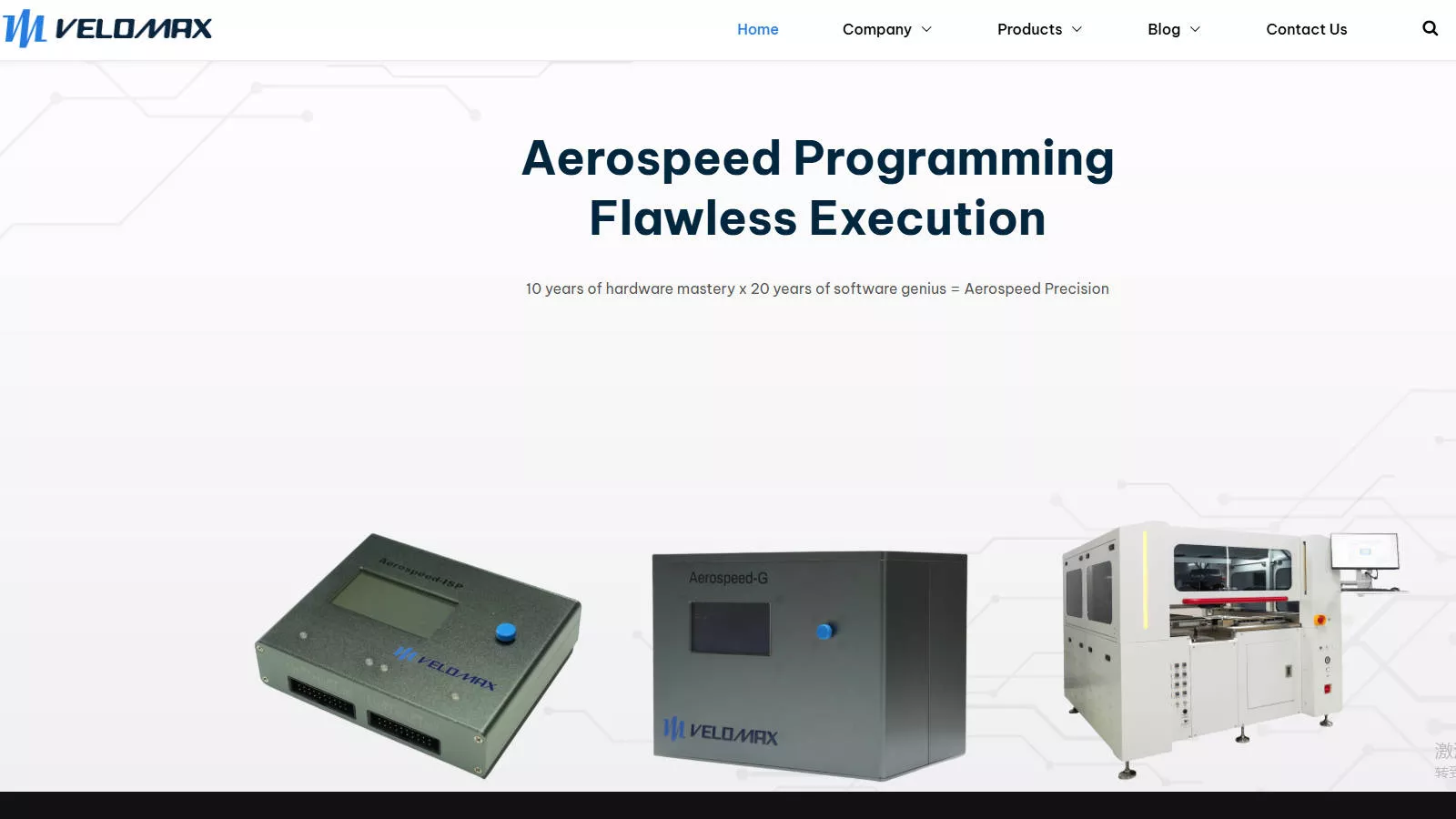
VeloMax offers the AST Series for automated IC programming and handling applications. The systems combine programming with functions such as inspection, marking, handling, and repacking to build an integrated production workflow.
The AST-1000 Automated IC Programming System is designed for mass production of high-density memory and microcontroller devices. It provides throughput of up to 1,500 UPH and supports automated programming, inspection, marking, and packing functions for UFS, eMMC, Flash, MCU, and more.
The AST-3000 Automated IC Programming System is designed for higher-throughput applications, offering a maximum throughput of 2,800 UPH for UFS, eMMC, NAND, and MCU mass production.
The AST-9000 Automated Programming System is VeloMax's top-tier high-throughput solution, delivering up to 3,000 UPH with full integrated handling, marking, optical inspection, and MES connectivity through API integration.
| System | Maximum Throughput | Production Position |
|---|---|---|
| AST-1000 | Up to 1,500 UPH | Medium- to high-volume production |
| AST-3000 | Up to 2,800 UPH | Higher-throughput production |
| AST-9000 | Up to 3,000 UPH | High-volume IC manufacturing |
An automated programming system can transform IC programming from a standalone operation into a coordinated manufacturing process. For high-volume production, the most important considerations include throughput, parallel processing, device compatibility, handling accuracy, inspection, traceability, and system integration.
The right solution depends on the manufacturer's actual production requirements. Evaluating the complete workflow rather than programming speed alone allows manufacturers to select an automated programming solution that supports current output while providing room for future growth.
Share your device list, package types, target UPH, input/output media, and inspection requirements with VeloMax's engineering team to discuss a suitable system configuration.
Contact Us
Discover this amazing content and share it with your network!
Your Name*
Your Email*


*We respect your confidentiality and all information are protected.
