
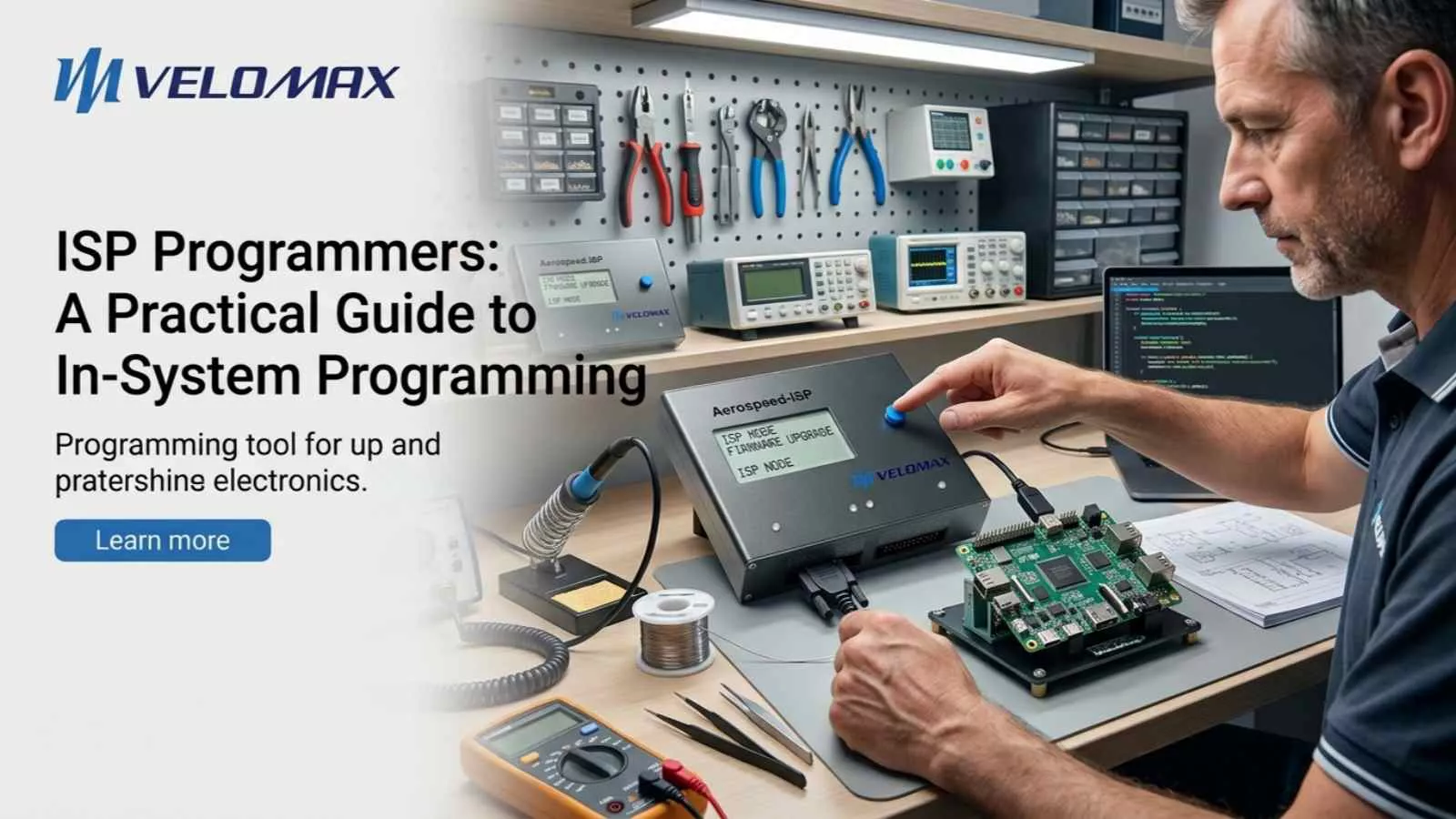
Programming firmware is a routine part of modern electronics manufacturing, but the programming method can have a direct impact on development efficiency, production flexibility, and manufacturing workflow. When an integrated circuit needs to be programmed after it has been installed in a target system, an ISP programmer can provide a practical solution.
ISP stands for In-System Programming. Instead of removing a programmable IC from the board for programming, an ISP programmer communicates with the device through an appropriate interface while it remains connected to the target system.
For engineers and manufacturers, however, choosing an ISP programmer involves more than finding a device that can write firmware. The target IC, programming interface, PCB access, firmware size, production volume, verification requirements, and desired automation level all need to be considered.
This guide explains what ISP programmers are, how ISP programming works, where the technology is used, and what manufacturers should evaluate when selecting an ISP programming solution.
3. How Does an ISP Programmer Work?
4. What Devices Can Be Programmed With ISP?
5. Where Are ISP Programmers Used?
6. Key Factors to Consider When Choosing an ISP Programmer
7. ISP Programming vs. Offline IC Programming
8. How to Choose the Right ISP Programmer for Production?
9. Automated IC Programming Solutions from VeloMax
10. Frequently Asked Questions About ISP Programmers
An ISP programmer is a programming device used to write, update, configure, or verify data on a programmable IC while the device remains connected to its target system.
In a typical application, the IC is already mounted on a PCB. The programmer connects to the board through a suitable connector, test point, fixture, or other programming access method. Programming software then controls the communication between the programmer and the target device.
The exact implementation depends on the IC architecture and manufacturer. There is no single universal ISP protocol that applies to every programmable device. Different devices may use interfaces such as:
This makes device compatibility one of the first factors to check when selecting an ISP programmer.
ISP means In-System Programming. The main idea is that firmware can be loaded into a programmable device without taking the IC out of the system in which it is installed.
A simplified process is:
Firmware File → Programming Software → ISP Programmer → Programming Interface → Target IC → Verification
Depending on the target device, the programming cycle may include device identification, memory preparation or erase, data transfer, verification, and result recording. The specific sequence varies between devices. For this reason, manufacturers should confirm the exact IC part number, programming protocol, voltage requirements, and programming algorithm before choosing equipment.
Although programming procedures vary, most ISP applications follow several basic stages:
The programmer establishes an electrical connection through a PCB connector, test points, fixture, or another suitable access method.
The programming system determines the target device and applies the required programming parameters.
Depending on the device, existing memory may be erased or prepared before the firmware is written.
The programmed data is checked against the expected firmware or configuration data.
In production environments, the programming result may be associated with a serial number, firmware version, timestamp, or pass/fail status. This final step becomes increasingly useful when programming is integrated into a traceable manufacturing process.
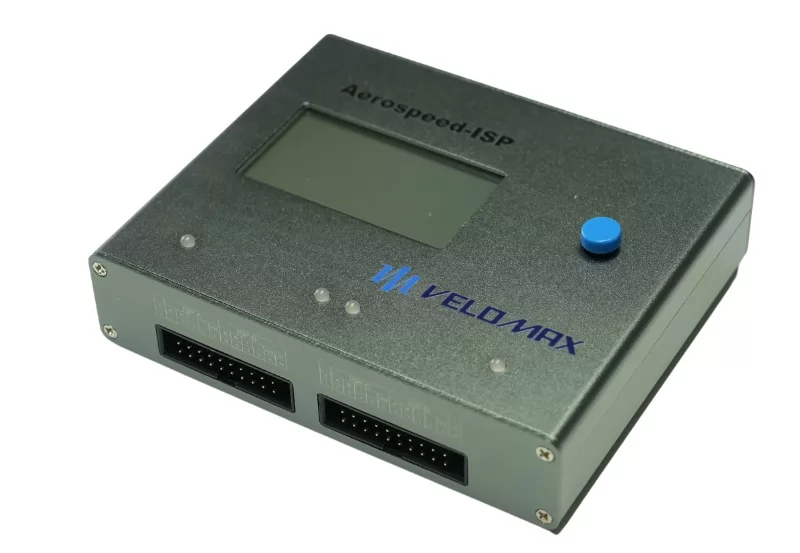
ISP programming can be used with various programmable IC categories, depending on the device architecture and supported programming method. Common examples include:
High-density memory devices such as eMMC and UFS require additional consideration. Their interface characteristics, data volumes, signal integrity requirements, and production throughput can affect whether an in-system or offline programming architecture is more appropriate.
Therefore, the fact that a device is programmable does not automatically mean that every ISP programmer can support it. The exact part number and programming requirements should always be confirmed with the equipment supplier.
Explore specialized ISP Programmers from VeloMax for high-reliability in-system programming solutions.
ISP programmers are used wherever programmable devices need to be configured or updated as part of an electronics development or manufacturing process. Typical applications include:
The programming requirements can vary significantly between applications. A development engineer may prioritize flexibility and ease of use, while a production engineer may focus on throughput, repeatability, verification, and traceability. For this reason, an ISP programmer should be selected according to the target device and manufacturing requirements, rather than simply the industry in which it will be used.
Choosing an ISP programmer is not simply a matter of finding a device that supports a particular IC. A suitable solution needs to match the electrical, software, and production requirements of the application.
The target IC should be the starting point of any ISP programmer evaluation. Check the exact:
Unlike offline IC programming, ISP programming requires reliable access to the target device within the system. This may involve:
Signal integrity can also become important, particularly when programming interfaces operate at higher speeds or when the connection between the programmer and target device is relatively long.
| Configuration | Typical Application |
|---|---|
| Single-site | Prototypes and engineering |
| Multi-site | Medium-volume production |
| Parallel programming | High-volume manufacturing |
Single-site programming is often sufficient during development because flexibility matters more than maximum throughput. When production volumes increase, multiple devices can potentially be programmed in parallel. This can reduce the programming bottleneck and improve utilization of downstream assembly and testing processes.
An ISP programmer is only part of the programming workflow. The software environment determines how easily engineers can set up projects, update algorithms, manage firmware versions, and control production rights. In industrial and automotive manufacturing, traceability features are often required, such as recording serial numbers, MAC addresses, firmware checksums, timestamps, and pass/fail logs.
Electronics manufacturers frequently compare ISP programming with offline IC programming. Both approaches are widely used, but they suit different production strategies:
| Factor | ISP Programming | Offline Programming |
|---|---|---|
| Programming location | On the target system | Separate from the system |
| Device handling | Usually lower | Required before assembly |
| PCB access | Required | Not required |
| Firmware updates | Convenient for supported applications | Requires device handling |
| Production suitability | Application-dependent | Application-dependent |
ISP programming is particularly attractive when the IC needs to be programmed after PCB assembly or when firmware configuration needs to remain flexible until a later production stage. Offline programming can be more practical when large quantities of standalone ICs need to be programmed before assembly. Read our full comparison on ISP vs. Offline Programming.
To select an ISP programmer that meets long-term manufacturing needs, engineering and production teams can use a structured step-by-step evaluation:
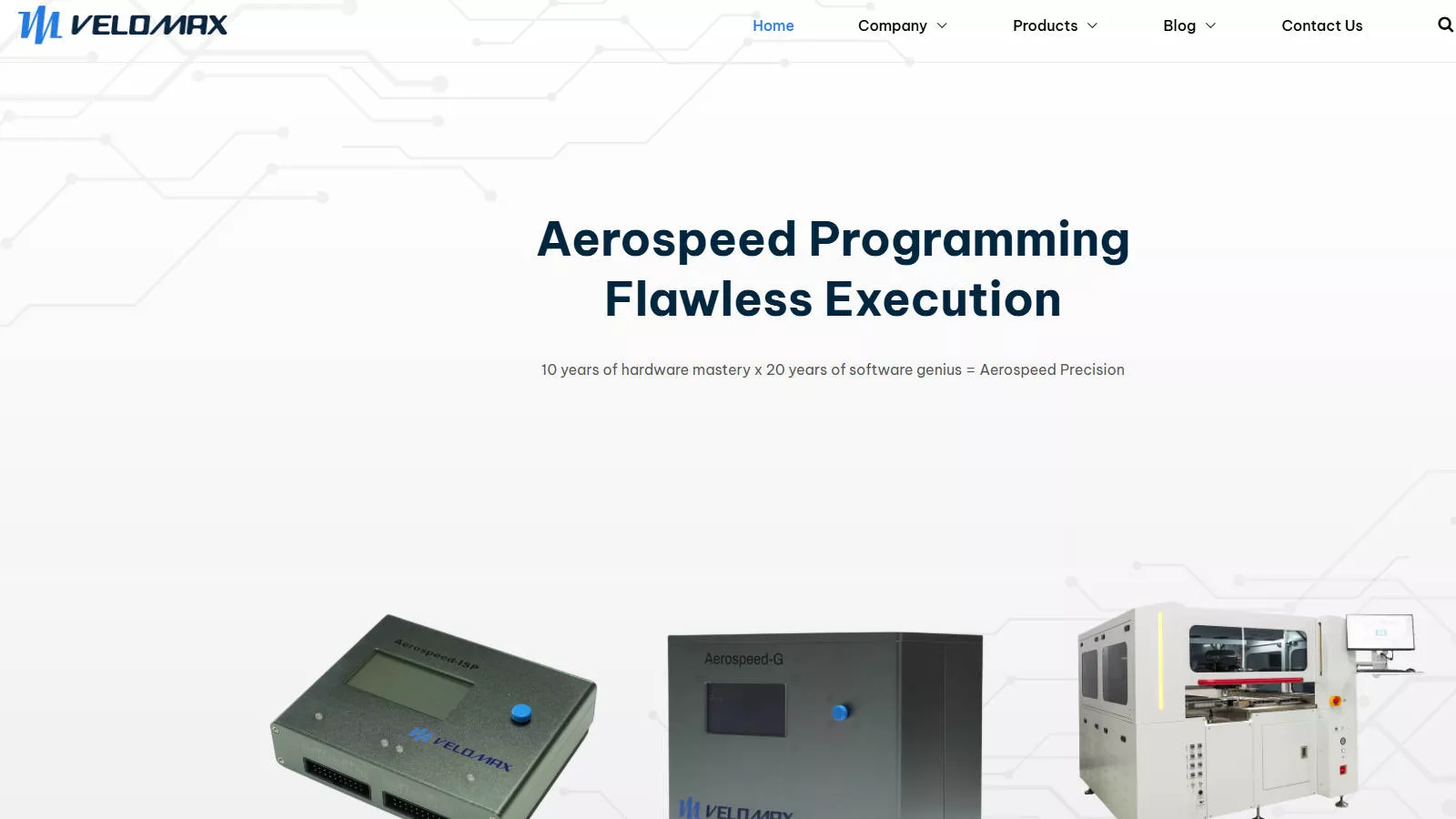
VeloMax develops automated IC programming and semiconductor handling systems designed for modern electronics manufacturing. Its solutions support high-volume production requirements where throughput, repeatability, and process integration are essential.
| VeloMax System | Max. Throughput | Programming Sites |
|---|---|---|
| AST-9000 | Up to 3,000 UPH | Up to 128 |
| AST-3000 | Up to 2,800 UPH | Up to 64 |
| AST-1000 | Up to 1,500 UPH | Up to 16 |
The systems support multiple IC categories and package formats, while production functions can include programming, inspection, marking, and device handling. Discover the AST-9000 Automated IC Programming System for enterprise manufacturing.
The right ISP programmer depends on the target IC, programming interface, production volume, throughput, and automation requirements. Manufacturers evaluating a new production process can provide these requirements to VeloMax for a more application-specific programming solution.
Discuss Your ISP Programming RequirementsAn ISP programmer writes or updates firmware and other programmable data while the target IC remains connected to its system, typically through a PCB programming interface.
ISP programming is used for firmware loading, device configuration, updates, and verification in applications where the target device supports in-system programming.
Depending on the programming method, ISP solutions can support MCUs, EEPROMs, Flash devices, FPGA/CPLD devices, and other programmable ICs. Exact compatibility should always be verified for the target part number.
It can be. For higher production volumes, manufacturers may need multi-site programming, automated handling, verification, and production-data integration to achieve the required throughput and repeatability.
Start with the target IC and programming protocol, then evaluate PCB access, programming time, throughput, programming sites, software, traceability, and automation requirements.
Choosing an ISP programmer requires balancing device compatibility, programming speed, interface accessibility, and software features. As electronics become increasingly complex and production cycles shrink, having an optimized In-System Programming process is crucial for maintaining quality and efficiency.
For manufacturers looking to integrate reliable in-system programming into automated environments, VeloMax delivers high-performance ISP programmers, automated IC handling equipment, and customized production solutions tailored to your unique assembly requirements.
Discover this amazing content and share it with your network!
Your Name*
Your Email*


*We respect your confidentiality and all information are protected.
