
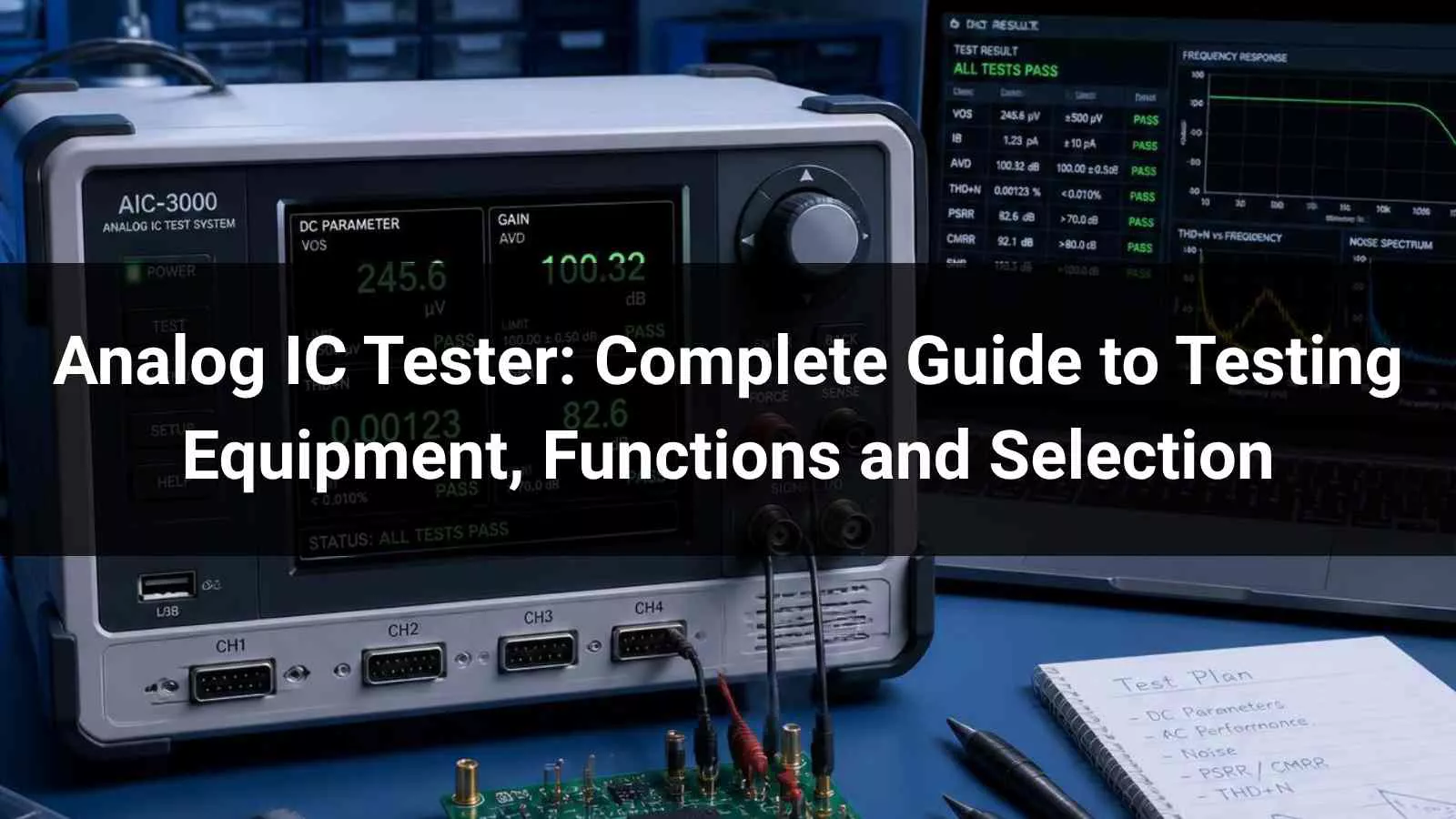
The semiconductor industry is entering a new stage where higher integration, improved reliability, and faster production cycles have become essential requirements for manufacturers. From automotive electronics and industrial systems to consumer devices and power management applications, analog integrated circuits continue to play a critical role in controlling and processing real-world electrical signals.
Unlike digital ICs that mainly operate through binary logic states, analog ICs process continuous signals such as voltage, current, and frequency variations. Because of this, their performance depends heavily on precise electrical characteristics and stable operating behavior.
To verify these requirements, semiconductor manufacturers rely on advanced testing solutions. An analog IC tester is specialized semiconductor testing equipment designed to evaluate the electrical performance, functionality, and reliability of analog integrated circuits before they enter the market.
Modern analog IC testing involves much more than basic electrical measurement. Manufacturers need systems capable of analyzing multiple parameters, including voltage accuracy, current consumption, leakage behavior, signal response, and functional performance. In high-volume production environments, testing equipment must also provide excellent repeatability, automation capability, and efficient data management.
Selecting the right analog IC tester requires careful consideration of device characteristics, production requirements, testing accuracy, and future scalability. This guide explains how analog IC testers work, their key functions, major types, applications, and important factors manufacturers should evaluate when choosing semiconductor testing equipment.
1. What Is an Analog IC Tester?
2. How Does an Analog IC Tester Work?
3. Key Testing Functions of Analog IC Testers
5. Analog IC Tester vs Digital IC Tester
6. Applications of Analog IC Testing Equipment
7. How to Choose the Right Analog IC Tester?
8. Analog IC Tester Manufacturer Selection Guide
9. Why Choose VeloMax for Semiconductor Automation Solutions?
10. Frequently Asked Questions About Analog IC Testers
An analog IC tester is a specialized system used to evaluate the electrical characteristics and functional performance of analog integrated circuits. The equipment applies controlled input signals to a device under test (DUT), measures the resulting electrical responses, and determines whether the device meets predefined specifications.
A typical analog IC tester is designed to analyze semiconductor devices where continuous electrical performance is critical. Common examples include:
An analog IC tester is semiconductor testing equipment used to verify analog integrated circuits by measuring parameters such as voltage, current, leakage, frequency response, and functional behavior.
Analog semiconductor devices often serve as the connection between physical environments and electronic systems. For example, sensors generate analog signals that require accurate processing, power ICs must maintain stable voltage output, and automotive semiconductor components must operate reliably under changing conditions. Even small electrical deviations can affect system performance. Therefore, manufacturers need reliable testing processes to identify defective devices and maintain production quality.
An effective analog IC testing process helps companies:
For semiconductor manufacturers, testing is not simply a final inspection step. It is an important part of the entire product development and production process.
| Item | Description |
|---|---|
| Equipment Type | Specialized semiconductor testing equipment for analog integrated circuits |
| Main Function | Evaluate electrical performance, functionality, and reliability of ICs |
| Core Technologies | Signal generation, high-precision measurement, DUT interfacing, and test software control |
| Common Applications | Automotive electronics, power electronics, consumer devices, industrial automation |
| Main Advantages | Ensures product quality, improves manufacturing yield, prevents component failures |
| Tested Devices | Op-amps, voltage regulators, power management ICs, sensor interface ICs, audio ICs |
An analog IC tester evaluates semiconductor devices by applying controlled electrical conditions and analyzing their responses. Although different testing platforms may use different architectures, most systems follow a similar testing workflow.
The first stage of analog IC testing involves generating accurate electrical signals. The tester provides controlled inputs such as voltage signals, current sources, frequency signals, and timing conditions to simulate the actual operating environment of the IC.
For example:
High-precision signal generation is essential because inaccurate test conditions can lead to incorrect evaluation results.
After generating test signals, the system connects the semiconductor device through an appropriate interface. Depending on the application, this may include test sockets, probe interfaces, automated handlers, or custom fixtures.
The DUT connection system must provide:
In mass production environments, automated handling equipment is often integrated with semiconductor test equipment to improve throughput and reduce manual operation.
Once signals are applied, the analog IC tester measures the response of the device, comparing results against predefined specifications to determine pass/fail status. Modern systems rely heavily on software capabilities to manage the entire testing workflow.
Key functions in this stage include:
For semiconductor manufacturers, data management provides essential visibility into process performance and potential quality issues.
An analog IC tester performs a wide range of electrical and functional evaluations to ensure that semiconductor devices meet design specifications. The exact testing requirements depend on the type of IC, but most analog semiconductor testing equipment focuses on several fundamental measurement areas.
Voltage measurement is one of the most important functions of an analog IC tester. Many analog semiconductor devices depend on accurate voltage control. For example, power management ICs and voltage regulators must maintain stable output voltage even when operating conditions change.
Voltage testing helps manufacturers evaluate:
High-precision voltage measurement is especially important for automotive electronics and power semiconductor applications, where reliability requirements are extremely strict.
Current measurement evaluates how an IC consumes and manages electrical current during operation. For battery-powered products, reducing power consumption is a major design objective. Accurate current testing allows manufacturers to identify abnormal power behavior and improve product efficiency.
Common current measurements include:
Leakage testing is used to detect unwanted current flow within semiconductor devices. Excessive leakage may indicate manufacturing defects, insulation problems, or device reliability issues. By measuring leakage characteristics, manufacturers can prevent defective components from reaching customers and improve overall production quality.
Functional testing verifies whether an analog IC performs according to its intended application. Unlike individual parameter measurements, functional testing provides a broader evaluation of whether the device operates correctly in a real application environment.
Depending on the device type, functional testing may include:
Many analog ICs process changing electrical signals, making frequency analysis an important part of testing. Frequency-related measurements evaluate bandwidth, signal response, noise characteristics, and stability. This type of testing is particularly important for communication devices, audio circuits, sensor interfaces, and mixed-signal semiconductor products.
Analog IC testers can be categorized according to their application environment, production requirements, and level of automation. The right choice depends on whether the system is used for research, product verification, or large-scale manufacturing.
Laboratory analog IC testers are mainly used during semiconductor research and product development. These systems prioritize flexibility and measurement capability rather than maximum production speed.
Typical applications include:
Key advantages include high measurement accuracy, flexible configuration, and detailed analysis capability. For semiconductor design teams, laboratory testing helps identify potential issues before products move into mass production.
Production analog IC testers are designed for semiconductor manufacturing environments where large quantities of devices must be tested efficiently. In semiconductor factories and OSAT facilities, testing equipment must operate continuously while maintaining stable performance.
Compared with laboratory systems, production testers focus more on:
A reliable production testing system helps manufacturers reduce testing costs while maintaining consistent quality.
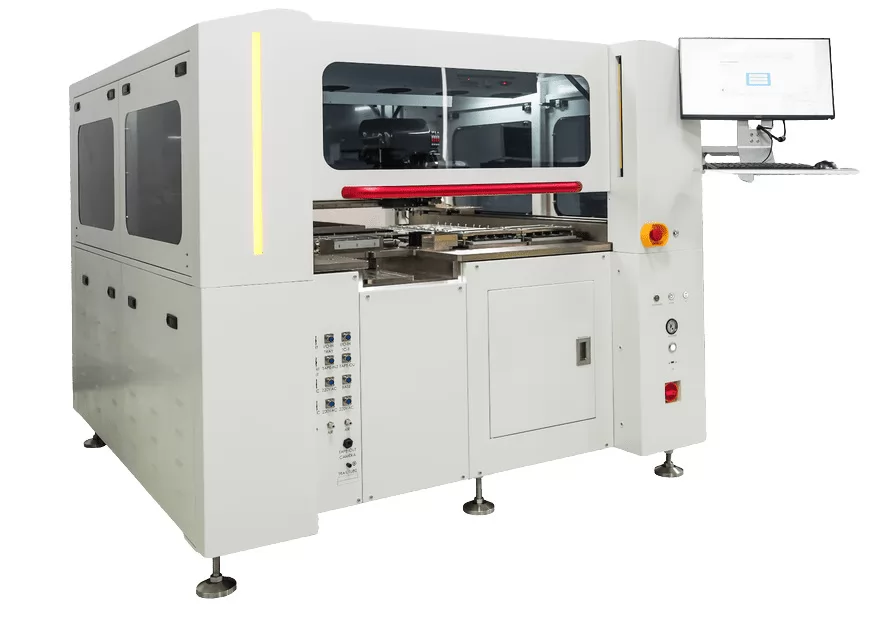
As semiconductor production becomes more automated, many manufacturers are adopting integrated testing solutions that combine hardware, software, and automated handling capabilities. For companies producing large volumes of semiconductor devices, automation capability has become an important factor when evaluating modern semiconductor manufacturing solutions.
An automated analog IC testing system can help improve:
In semiconductor production environments, automated IC production systems can also integrate programming, inspection, marking, and handling processes to improve overall manufacturing efficiency.
Although analog and digital IC testers serve similar overall quality control purposes, they focus on different aspects of semiconductor performance. Analog IC testing focuses on measuring physical electrical behavior, while digital IC testing focuses on verifying logical operation. Understanding these differences helps manufacturers choose suitable IC testing equipment for their applications.
| Feature | Analog IC Tester | Digital IC Tester |
|---|---|---|
| Main Testing Target | Analog and mixed-signal circuits | Digital logic circuits |
| Signal Type | Continuous electrical signals | Binary signals |
| Main Measurement | Voltage, current, frequency, electrical characteristics | Logic operation, timing, digital functions |
| Typical Devices | Amplifiers, regulators, sensors, power ICs | MCU, memory, processors |
| Testing Focus | Electrical accuracy and signal performance | Logic verification and data processing |
However, many modern semiconductor products combine analog and digital functions. These mixed-signal ICs often require advanced testing systems that can evaluate both electrical parameters and digital performance simultaneously.
Analog IC testing equipment is widely used across industries where semiconductor reliability and performance are critical.
The automotive industry has become one of the fastest-growing markets for analog semiconductor devices. Modern vehicles use analog ICs in battery management systems, sensor control modules, power management systems, and vehicle communication equipment. Because automotive components must operate reliably for many years, accurate analog IC testing is essential for ensuring safety and product quality.
Power electronics applications require semiconductor devices that can operate under changing electrical conditions. Analog IC testing is commonly used for power management ICs, voltage regulators, charging systems, and energy control components. Testing helps verify whether devices can maintain stable performance under different voltage and current conditions.
Consumer products rely on many analog semiconductor components, including:
Reliable testing helps manufacturers improve product performance while reducing overall market failure rates.
Industrial automation equipment and control systems require semiconductor components with high stability and accuracy. Analog IC testers support applications such as industrial controllers, measurement systems, monitoring equipment, and automation devices. For industrial applications, consistent semiconductor performance is essential because equipment often operates continuously in demanding environments.
Selecting the right analog IC tester is a strategic decision for semiconductor manufacturers because testing equipment directly influences product quality, manufacturing efficiency, and long-term production costs. A suitable testing system should solve current production requirements while providing enough flexibility for future product development.
Measurement accuracy is one of the most critical factors when choosing an analog IC tester. Analog semiconductor devices often operate within strict electrical specifications, and even small measurement errors can result in incorrect pass/fail decisions.
A reliable testing system should provide stable measurement capabilities for:
For applications such as automotive electronics and power management devices, precise testing is essential because product reliability directly affects overall system performance.
For high-volume semiconductor manufacturing, testing speed has a direct impact on production capacity. A high-performance analog IC tester should balance accuracy with throughput. Important factors include test time per device, the number of devices tested simultaneously, the level of system automation, and overall equipment utilization.
Semiconductor manufacturers often work with different IC designs, package types, and customer requirements. Therefore, testing equipment should support various formats without requiring frequent hardware replacement. Software capabilities are equally critical—advanced platforms should support automated test program management, real-time data collection, test result analysis, quality monitoring, and full production traceability.
Every semiconductor production environment has unique requirements. Standard equipment may not always provide the exact configuration needed for a specific application. A capable supplier should support customized testing configurations, software optimization, production line integration, and special handling requirements. This is especially important for companies producing specialized semiconductor devices or working with complex manufacturing processes.
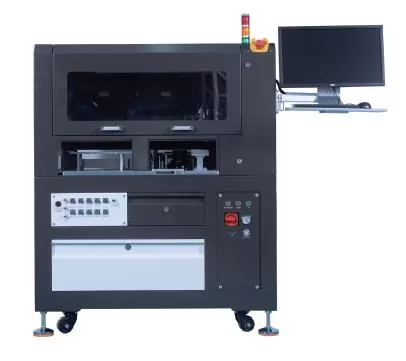
Choosing the right supplier is just as important as selecting the right equipment. A reliable semiconductor test equipment supplier should provide not only hardware but also engineering support, customization capability, and long-term service.
Before purchasing an analog IC tester, manufacturers should evaluate:
When selecting a supplier, manufacturers should consider:
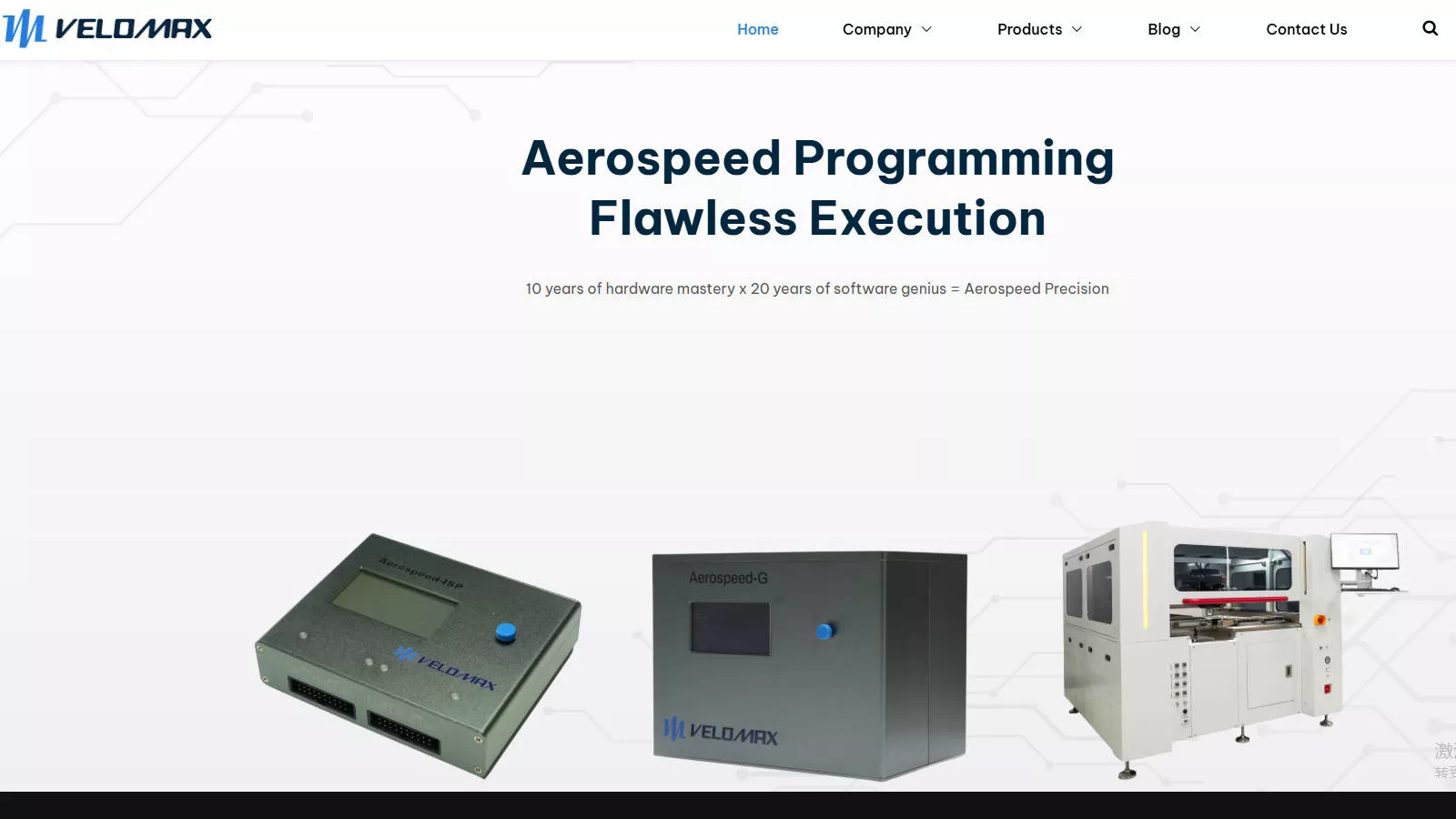
As semiconductor manufacturing becomes more complex, companies increasingly require automation solutions that improve production efficiency, accuracy, and process consistency. VeloMax provides semiconductor automation and IC production solutions designed to support modern manufacturing requirements. The company focuses on automated programming systems, production equipment integration, and customized solutions for semiconductor-related applications.
VeloMax develops automation solutions that help manufacturers improve efficiency and reliability throughout IC production processes. Its solutions are designed to support high-speed operation, accurate device handling, automated workflows, and production consistency.
Different semiconductor manufacturers have different production environments and technical requirements. VeloMax provides customized solutions based on customer needs, including equipment configuration adjustments, process optimization, and production line integration. This flexibility allows manufacturers to develop more efficient production systems for specific applications.
In addition to automation integration, VeloMax provides high-speed IC programming and related production solutions for semiconductor manufacturing applications. Its automated systems combine key operational functions:
These capabilities help manufacturers improve throughput, reduce manual operations, and maintain consistent production quality.
| Solution | Description |
|---|---|
| Semiconductor Automation Systems | Designed for IC production facilities requiring reliable, high-speed automated processing, improved workflow consistency, and reduced operational downtime. |
| Custom IC Production Solutions | Tailored equipment configurations and system integration designed to match specific manufacturing environments and complex semiconductor backend requirements. |
| Automated IC Programming & Handling | Integrated systems combining automated device handling, programming, marking, and sorting to maximize production throughput and maintain strict quality control. |
Our technical team is available to help you evaluate your requirements and recommend the optimal semiconductor automation and testing integration solution for your production environment. Contact VeloMax Systems today to start the conversation.
Contact UsAn analog IC tester is semiconductor testing equipment used to evaluate the electrical characteristics and functional performance of analog integrated circuits. It measures parameters such as voltage, current, leakage, and signal response to determine whether a device meets required specifications.
An analog IC tester can evaluate various electrical characteristics, including:
Analog IC testing focuses on continuous electrical signals and parameters such as voltage, current, and frequency response. Digital IC testing focuses on logic operations, timing performance, and binary signal processing. Many modern chips combine both analog and digital functions, requiring advanced mixed-signal testing capabilities.
Yes. Many semiconductor manufacturers require customized testing solutions due to differences in device design, package type, and production processes. Customization may include hardware configuration, software development, testing procedures, and production line integration.
An analog IC tester plays an essential role in ensuring semiconductor reliability, production efficiency, and product quality. From early-stage development to large-scale manufacturing, accurate testing allows companies to identify defects, improve yield, and maintain consistent performance.
When selecting analog IC testing equipment, manufacturers should consider more than measurement capability alone. Factors such as automation level, system flexibility, software capability, and supplier experience are equally important. As semiconductor applications continue expanding across automotive, industrial, consumer electronics, and power management sectors, reliable testing and automation solutions will remain critical for manufacturers.
For companies seeking to improve IC production efficiency through advanced automation, flexible integration, and customized manufacturing solutions, VeloMax provides semiconductor automation systems designed to support evolving industry requirements.
Our technical team is available to help you evaluate your requirements and recommend the optimal semiconductor automation and testing integration solution for your production environment. Contact VeloMax Systems today to start the conversation.
Contact Us
Discover this amazing content and share it with your network!
Your Name*
Your Email*


*We respect your confidentiality and all information are protected.
