
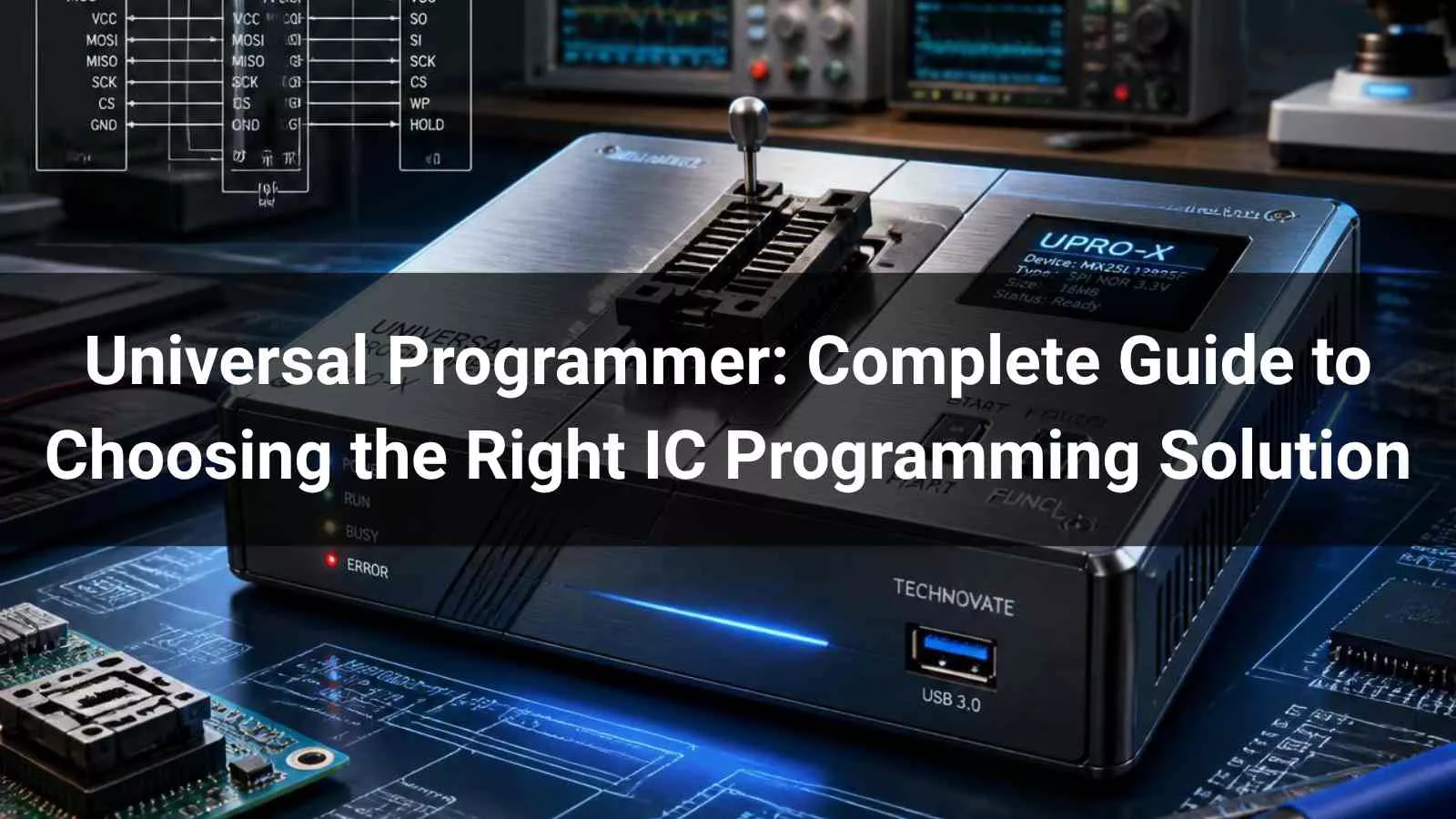
Integrated circuits (ICs) are at the core of almost every modern electronic product, from automotive systems and industrial controllers to consumer devices and IoT applications. Before these chips can be integrated into final products, they often require programming processes that load firmware, configuration data, or application codes into their internal memory.
A universal programmer is one of the most widely used tools for programming different types of programmable IC devices. Unlike dedicated programmers designed for a specific chip family, universal programmers are developed to support a broad range of components, providing flexibility for engineers, developers, and electronics manufacturers.
With the increasing variety of semiconductor devices, selecting the right programming solution has become an important consideration for companies involved in electronics production. Factors such as device compatibility, programming speed, software support, and production requirements can directly influence manufacturing efficiency and reliability.
For engineering teams and small-batch production environments, a universal programmer can provide a practical and flexible solution. However, manufacturers with high-volume production requirements may need more advanced automation solutions to achieve higher throughput and consistency.
This guide explains what a universal programmer is, how it works, key features to consider, common applications, and how it compares with automated IC programming systems used in modern semiconductor manufacturing.
1. What Is a Universal Programmer?
2. How Does a Universal Programmer Work?
3. Key Features to Consider When Choosing a Universal Programmer
4. Applications of Universal Programmers
5. Universal Programmer vs Automated IC Programming System
6. How to Choose the Right Universal Programmer for Your Business
7. Why Choose VeloMax for IC Programming Solutions?
8. Frequently Asked Questions About Universal Programmers
A universal programmer is an electronic device designed to program multiple types of integrated circuits by transferring digital data, firmware, or configuration information into programmable semiconductor components.
Unlike a dedicated IC programmer that supports only a limited range of devices, a universal programmer is built with wider compatibility. It can typically support various memory chips, microcontrollers, programmable logic devices, and other semiconductor components through different adapters and programming sockets.
Universal programmers are commonly used during:
The main purpose of a universal programmer is to provide engineers with a flexible programming platform without requiring separate programming equipment for every chip model.
| Item | Description |
|---|---|
| Equipment Type | Electronic device for programming multiple types of programmable IC devices |
| Main Function | Transfer digital data, firmware, or configuration into semiconductor components |
| Core Technologies | Adapters, programming sockets, communication interfaces, and control software |
| Common Applications | Product development, prototype testing, engineering verification, small-volume manufacturing |
| Main Advantages | Wide device compatibility, flexible programming platform, reduced equipment investment |
| Supported Devices | EEPROM, EPROM, Flash memory, MCU, CPLD, FPGA, and other programmable chips |
Although universal programmers may differ in design and capability, most devices follow a similar programming process. The general workflow includes device identification, data loading, programming execution, and verification.
Before programming begins, the programmer needs to identify the target device. The operator selects the chip model through programming software, and the system checks whether the selected device matches the connected component.
This step ensures:
Device identification is particularly important because different ICs may require different programming algorithms and electrical conditions.
After the device is recognized, the programming data is loaded into the programmer. Common file formats include:
The programmer transfers the data into the IC through communication interfaces between the programming hardware and the semiconductor device. The transfer process must be accurate because incorrect programming data can affect product performance or cause manufacturing failures.
During the programming stage, the universal programmer writes data into the memory area of the IC. After programming is completed, the system usually performs verification to confirm that:
For engineering applications, verification helps reduce development risks. In manufacturing environments, reliable verification processes are essential for maintaining product consistency.
Choosing a suitable universal programmer requires more than simply checking the number of supported devices. Different users have different requirements depending on application scenarios, production volume, and semiconductor components. The following factors should be evaluated before selecting a programming solution.
One of the most important factors is device compatibility. A high-quality universal programmer should support a wide range of programmable devices, including:
For companies working with multiple product lines, broad compatibility reduces the need to purchase multiple programming tools. However, manufacturers should always confirm whether the programmer supports the exact chip models used in their production process. A larger device library does not always mean better performance. The actual compatibility with target components is more important.
Programming speed becomes increasingly important as production volumes increase. For engineering development or prototype production, programming time may not be a major concern. However, for electronics manufacturers producing thousands or millions of units, programming efficiency directly affects overall production capacity.
Important factors include:
A universal programmer designed mainly for laboratory use may not be the best option for large-scale manufacturing environments. Companies should evaluate whether their programming equipment can meet current production needs while supporting future expansion.
Hardware capability alone does not determine the effectiveness of a programmer. Programming software plays an equally important role. Good software support provides:
Because semiconductor products continue to evolve, programming equipment must keep pace with new chip generations. Manufacturers should consider whether suppliers provide long-term software updates and technical support.
Another important consideration when selecting a universal programmer is package compatibility. Modern semiconductor devices are available in many different package types. A programming solution that supports only limited packages may create additional costs and operational challenges.
Common IC package types include:
A flexible programming system should be able to handle different package requirements through appropriate sockets, adapters, or programming fixtures. For research and development teams, package flexibility allows engineers to work with various chip designs during product development. For manufacturers, it helps simplify production changes when moving between different semiconductor components.
Before purchasing a programmer, companies should evaluate:
This evaluation helps ensure that the programming equipment remains useful as product requirements evolve.
Programming accuracy is a critical factor in electronics manufacturing. Even a small programming error can result in:
A reliable IC programmer should provide stable operation, accurate voltage control, and consistent programming performance. Important reliability features include:
For engineering applications, reliability improves development efficiency. For manufacturing environments, it directly contributes to production quality and customer satisfaction. Companies should not evaluate programming equipment only by initial purchase cost. Long-term stability, technical support, and operational efficiency are equally important factors.
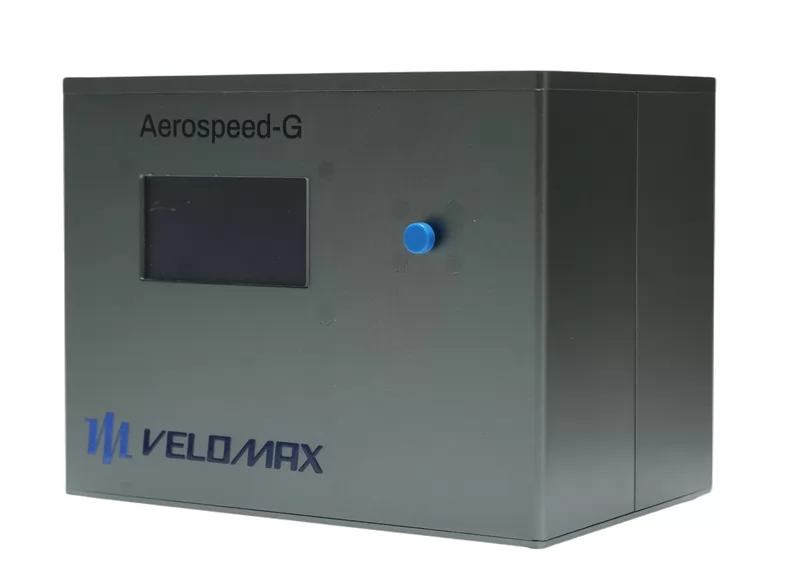
Universal programmers are widely used across different stages of electronics development and manufacturing. Their flexibility makes them suitable for various applications, from engineering laboratories to small-scale production environments.
In electronics manufacturing, universal programmers are commonly used for loading firmware and configuration data into programmable components. Typical applications include:
Manufacturers often use universal programmers during product introduction, testing, or low-volume production because they provide flexibility when working with different chip models. For companies producing multiple product variations, a flexible programming solution can reduce equipment investment and simplify engineering operations.
The automotive industry increasingly relies on programmable semiconductor components for:
Automotive electronics often require high reliability and strict quality control. Universal programmers can support development and testing processes by allowing engineers to program and verify different semiconductor devices during product development cycles. However, automotive manufacturers with large production volumes may require more automated programming solutions to achieve higher efficiency.
Consumer electronics and IoT products usually involve large numbers of programmable components. Applications include:
During product development, universal programmers allow engineers to quickly test different firmware versions and modify device configurations. For mass production, companies may gradually move from manual programming tools toward automated systems to improve production speed and reduce human involvement.
Universal programmers remain an essential tool in research laboratories and prototype development. Engineers use them for:
Because prototype projects often involve different chip models and frequent design changes, flexibility is usually more important than maximum production speed. This is one reason why universal programmers continue to be widely adopted among engineering teams.
While a universal programmer is a valuable tool for flexible IC programming, it is not always the ideal solution for every production environment. As manufacturing requirements increase, companies often need more advanced automation solutions to improve efficiency, consistency, and scalability. The main difference between these two solutions is their intended application.
| Feature | Universal Programmer | Automated IC Programming System |
|---|---|---|
| Main Purpose | Flexible programming for various IC devices | High-volume production programming |
| Operation Method | Manual or semi-automatic operation | Automated production workflow |
| Suitable Users | Engineers, laboratories, small production teams | Semiconductor and electronics manufacturers |
| Programming Capacity | Limited by operator handling | Designed for continuous production |
| Labor Requirement | Higher manual involvement | Reduced operator dependence |
| Production Integration | Limited integration capability | Can integrate with manufacturing processes |
| Best Application | Development, testing, small batches | Mass production environments |
A universal programmer is usually suitable when flexibility is the main priority. Typical scenarios include:
However, when production demand increases, manufacturers often face challenges such as:
In these situations, an automated IC programming system can provide significant advantages. Automated programming solutions are designed for production environments where speed, repeatability, and integration are critical. They can help manufacturers achieve:
For electronics manufacturers requiring high-volume IC programming capabilities, VeloMax automated programming equipment provides a more scalable approach compared with traditional universal programmers.
Modern semiconductor production requires more than simply programming chips. Manufacturers increasingly focus on complete backend automation workflows, including:
An automated programming system can become part of a larger production solution, helping companies improve manufacturing efficiency while maintaining consistent quality standards. This approach is especially valuable for industries where production volume and reliability are critical, including:
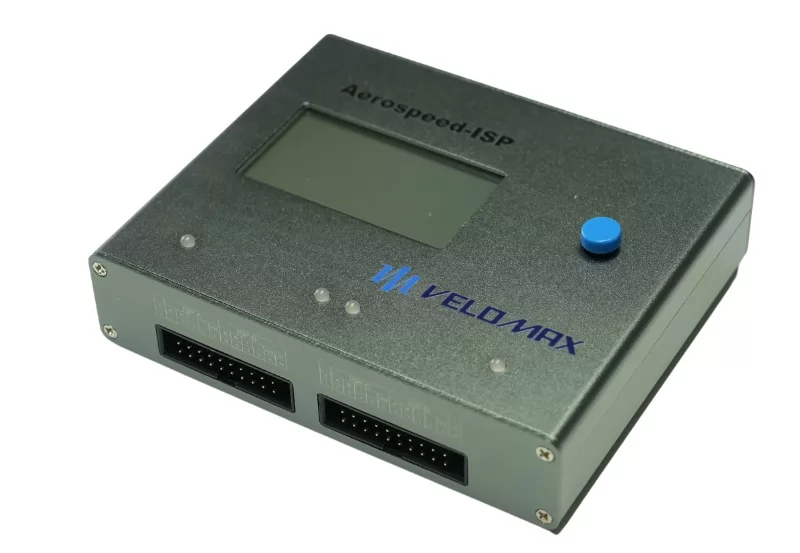
Selecting the right universal programmer depends on the specific requirements of each company. A device that works well for product development may not be suitable for a high-volume manufacturing environment. Before making a purchasing decision, companies should evaluate several important factors, including production scale, device compatibility, workflow requirements, and future expansion plans.
The first step is identifying the purpose of the programming equipment. Different applications require different levels of performance.
For research and development teams, flexibility is often the most important factor. A suitable programmer should provide:
In this environment, engineers often need to switch between different components during testing and validation.
For small and medium production volumes, companies usually require a balance between flexibility and efficiency. Important considerations include:
A universal programmer can be a practical option for manufacturers that do not yet require full automation.
Large-scale electronics manufacturers have different priorities. When production volumes increase, companies typically focus on:
In these situations, a standard universal programmer may not provide enough efficiency. Manufacturers should consider automated IC programming solutions that can be integrated into production lines.
Another important consideration is future production growth. Many companies purchase equipment based only on current requirements. However, semiconductor and electronics industries often experience rapid product changes and increasing production demands.
A suitable programming solution should allow businesses to expand without completely replacing existing equipment. Questions to consider include:
Choosing a scalable solution helps reduce long-term equipment costs and improves operational flexibility.
Modern electronics manufacturing increasingly depends on automation. Programming equipment is no longer an isolated process. It is often connected with other manufacturing stages, including:
For companies operating advanced manufacturing facilities, integration capability is becoming an important selection criterion. An IC programming machine that can communicate with automated production systems can help improve efficiency and reduce manual intervention.
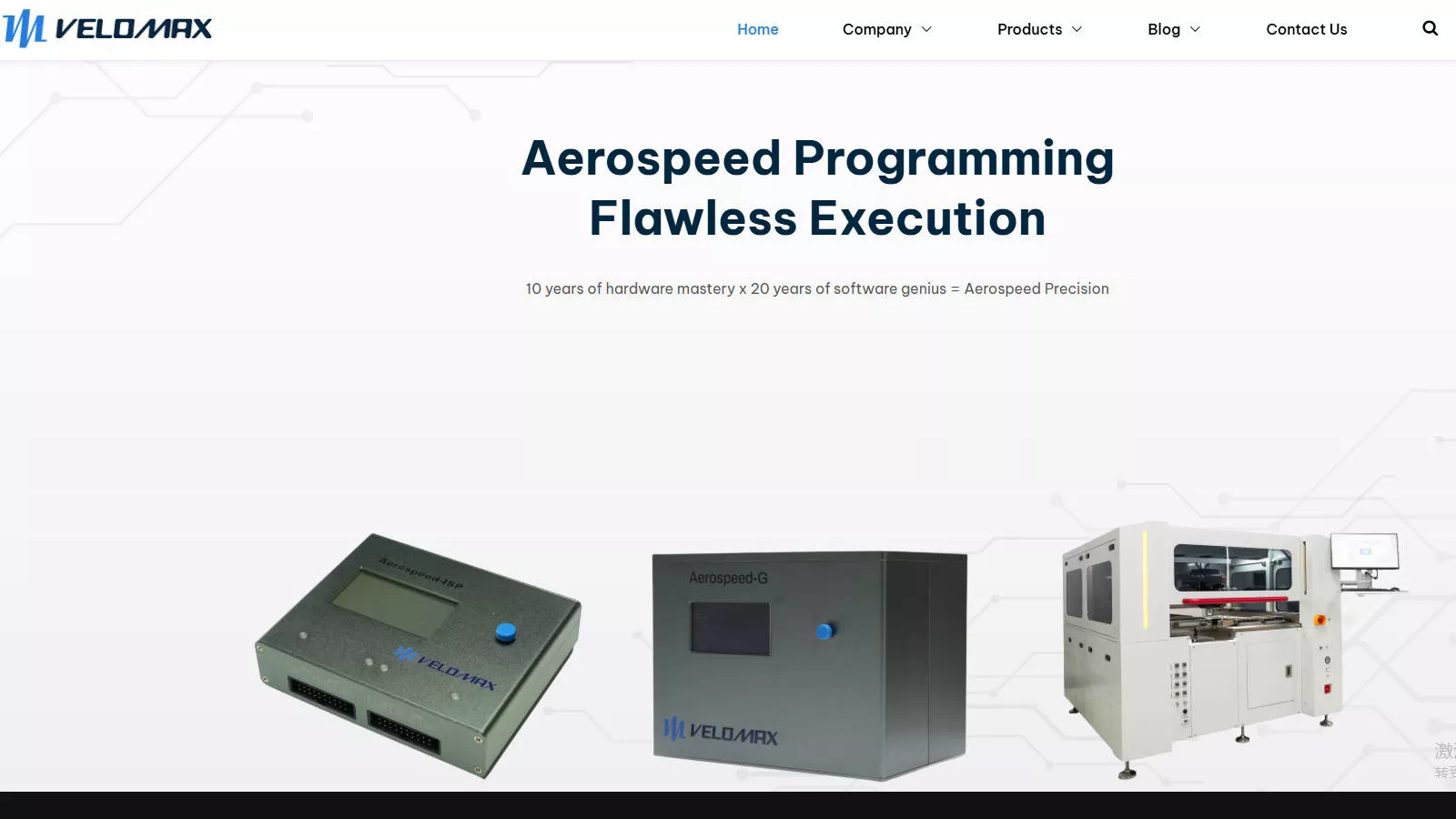
While universal programmers are widely used for flexible IC programming tasks, modern semiconductor and electronics manufacturers increasingly require more advanced automation solutions to support higher production demands. VeloMax specializes in providing advanced IC programming automation solutions designed for industrial manufacturing environments. The company focuses on improving programming efficiency, production consistency, and automation performance for semiconductor-related applications.
VeloMax develops automated programming solutions designed for high-efficiency IC production environments. These systems are designed to support manufacturers that require:
In modern electronics manufacturing, programming speed directly affects overall production capacity. VeloMax solutions are designed to help manufacturers optimize programming processes by combining:
This approach helps companies improve output while maintaining programming accuracy.
IC programming is an important stage in semiconductor backend manufacturing. Beyond programming itself, efficient production often requires coordination between:
VeloMax provides automation solutions that support these manufacturing requirements.
| Product | Description |
|---|---|
| Automated IC Programming System | Designed for manufacturers requiring efficient and consistent IC programming operations. Main advantages include automation capability, high production efficiency, reduced operator involvement, and stable programming performance. |
| IC Handling Automation Equipment | Efficient material handling plays an important role in semiconductor production. Automated handling solutions can help improve workflow efficiency, production consistency, and equipment utilization. |
| Automated Tray Sorting System | Tray management and sorting are essential parts of semiconductor backend processes. VeloMax provides automated tray sorting solutions to support organized and efficient production workflows. |
Our technical team is available to help you evaluate your requirements and recommend the optimal IC programming solution for your production environment. Contact VeloMax Systems today to start the conversation.
Contact UsA universal programmer is used to write firmware, software codes, or configuration data into programmable semiconductor devices. It can support various IC components, including EEPROM, Flash memory, MCU, CPLD, and other programmable chips. Universal programmers are commonly used in engineering development, testing, repair, and small-volume production applications.
No. Although universal programmers support a wide range of semiconductor devices, no programmer can support every IC available on the market. Compatibility depends on:
Before purchasing equipment, users should confirm whether the programmer supports their specific IC models.
A universal programmer focuses on flexibility and broad device compatibility. It is commonly used for:
An automatic programmer is designed for higher-volume manufacturing. Compared with traditional universal programmers, automated IC programming systems provide:
A universal programmer can be used for certain small production tasks, but it may not be the most efficient choice for large-scale manufacturing. Mass production environments usually require automated solutions that can handle higher volumes while maintaining consistent quality. For manufacturers producing large quantities of programmed IC devices, automated programming equipment is often a more suitable option.
A universal programmer remains an important tool for engineers, developers, and manufacturers that need flexible IC programming capabilities. Its wide device compatibility and practical operation make it suitable for product development, testing, and smaller production requirements.
However, as electronics manufacturing continues to move toward higher efficiency and automation, companies with large-scale production needs must consider more advanced solutions. An automated IC programming system can provide greater throughput, improved consistency, and better integration with modern manufacturing workflows.
VeloMax provides advanced IC programming solutions designed to support semiconductor and electronics manufacturers seeking more efficient and reliable production processes. By combining automation technology with semiconductor backend expertise, VeloMax helps companies improve programming efficiency and prepare for future manufacturing challenges.
Our technical team is available to help you evaluate your requirements and recommend the optimal IC programming solution for your production environment. Contact VeloMax Systems today to start the conversation.
Contact Us
Discover this amazing content and share it with your network!
Your Name*
Your Email*


*We respect your confidentiality and all information are protected.
