
In the rapidly evolving landscape of modern electronics manufacturing, the demand for higher device density, zero-defect quality, and accelerated time-to-market has never been more intense. At the heart of this manufacturing ecosystem lies the critical step of device programming—flashing firmware, boot code, cryptographic keys, and configuration data onto integrated circuits (ICs). As electronic assemblies become more sophisticated, relying on manual flash programming introduces significant operational bottlenecks, high chip-damage rates, and unpredictable manufacturing throughput. Consequently, an automated IC programmer has transformed from a high-tier manufacturing luxury into an essential cornerstone of competitive semiconductor and electronics production. From automotive controllers driving autonomous systems to high-performance IoT devices and consumer electronics, modern products depend on complex, high-capacity chips like eMMC, UFS, and microcontrollers (MCUs). Managing these components in high volumes requires a shift away from legacy manual programming toward streamlined IC programming automation. Automated systems bridge the gap between silicon fabrication and final printed circuit board assembly (PCBA), ensuring that every chip is programmed, verified, inspected, and packaged with extreme precision.
1. What Is an Automated IC Programmer?
2. How Does an Automated IC Programmer Work?
3. Types of IC Programming Solutions
4. Key Benefits of Automated IC Programmers
5. Applications Across Key Industries
6. Automated IC Programmer vs. Manual Programmer
7. How to Choose the Right Automated IC Programmer
8. Why Choose VeloMax for IC Programming Solutions?
10. Frequently Asked Questions (FAQ)
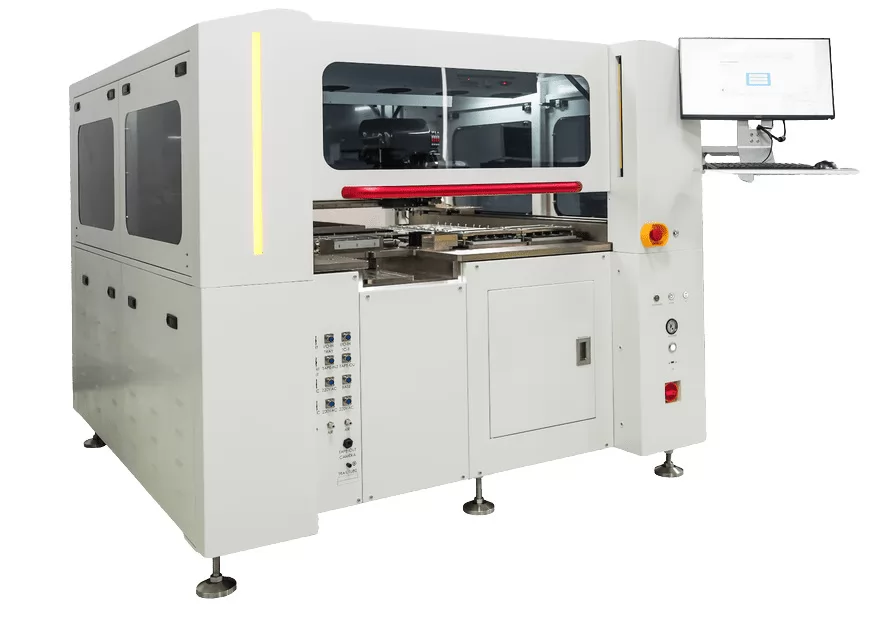
An automated IC programmer (also referred to as an automated IC programming system or automatic IC programmer) is an integrated industrial machine designed to automate the complete lifecycle of device loading, programming, inspection, marking, and repackaging without human intervention.
Unlike standalone manual programmers that require an operator to manually insert each chip into a socket and trigger the programming software, automated IC programming equipment combines robotic pick-and-place nozzles, high-resolution optical vision systems, high-speed parallel programming engines, and automated output packaging mechanisms.
To support the diverse range of modern electronics, an automated IC programming system must accommodate multiple semiconductor packaging formats and device architectures.
| Device Family | Supported Interfaces & Protocols | Technical & Data Characteristics | Typical Industry Applications |
|---|---|---|---|
| MCUs / Microcontrollers | Internal Flash, EEPROM, ARM Cortex, RISC-V, JTAG, SWD | Low to medium capacity (KB to MB); focuses on boot logic, configuration, and secure keys. | Automotive ECUs, Industrial Controllers, Smart Home IoT |
| NOR / SPI Flash | SPI, Dual/Quad SPI, Octal SPI, Parallel NOR | Medium capacity (MB); fast read execution speeds, high boot reliability. | Network Routers, Automotive Dashboards, System BIOS |
| NAND Flash | Parallel NAND, Serial NAND, ONFI, Toggle Mode | Large capacity (MB to GB); requires bad block management and error correction (ECC). | Medical Imaging, Digital Signage, Industrial Storage |
| eMMC & UFS | eMMC 5.1, UFS 2.1 / 3.1 / 4.0 (MIPI M-PHY) | Ultra-high density (GB to TB); demands high-bandwidth parallel bus write speeds. | Smartphones, Vehicle Smart Cockpits, ADAS Systems |
Understanding the operational sequence of an automated IC programming system illustrates why it offers unmatched speed, repeatability, and yield protection compared to manual operation. The process executes across four seamlessly integrated stages.
The workflow begins at the media input module. Depending on how raw semiconductors arrive from the distributor or foundry, the automated handler accepts components from JEDEC trays, plastic tubes, or tape-and-reel feeders. Robotic pick-and-place heads equipped with precision vacuum nozzles select unprogrammed ICs. Upward and downward cameras inspect each chip mid-flight to confirm Pin 1 orientation and prevent misaligned insertion into socket adapters.
Once aligned, the handler loads the chips into arrays of high-density socket boards. Modern automated programmers utilize asynchronous parallel programming techniques: while one bank of sockets undergoes a lengthy memory write and verification cycle, the robotic arm loads unprogrammed chips into a secondary socket bank. This eliminates handler idle time and maintains maximum programming socket utilization.
Quality assurance is strictly enforced throughout the cycle. Electric checksum verification ensures 100% firmware fidelity. Simultaneously, Automated Optical Inspection (AOI) checks for:
Passed ICs are transferred to the selected output media—typically sealed Tape & Reel or JEDEC trays. Inline laser markers or dot-ink nozzles apply visual pass marks or batch tracking codes. Crucially, the system's operating software interfaces directly with the factory Manufacturing Execution System (MES) via SECS/GEM or custom APIs, logging socket cycle counts, pass/fail yields, and job IDs for total lot traceability.
Electronics manufacturers operate across varying scales—from early-stage engineering R&D to full-scale 24/7 mass production. Choosing the right equipment requires understanding the primary categories of programming hardware available.
Designed for maximum efficiency in high-volume production, fully automated systems integrate multi-nozzle robotic handlers, high-density socket capacity (16 to 64+ sockets), automated tray changers, tape packaging units, and inline laser markers.
Semi-automated solutions combine mechanical socket insertion with operator-assisted media feeding. An operator manually loads component trays or tubes, while internal precision robotics handle socket loading, programming, and sorting.
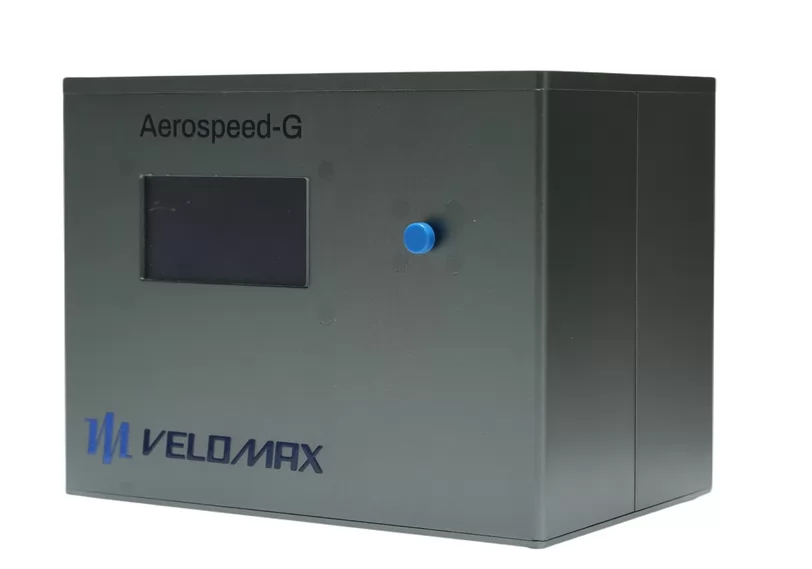
Manual programmers consist of desktop hardware units where an operator manually inserts and removes chips using vacuum pens or tweezers. While low in initial cost, they are limited by human handling speed and fatigue.
Upgrading from manual flash programming to an automated infrastructure provides measurable financial, quality, and operational returns.
| Performance Metric | Manual Programming Method | Automated IC Programming System | Manufacturing Impact |
|---|---|---|---|
| Throughput Speed (UPH) | 100 – 250 units/hour per operator | 1,500 – 4,000+ units/hour | 10x to 20x Productivity Gain: Eliminates SMT line starvation. |
| First-Pass Yield (FPY) | Variable (85% – 95%); prone to operator error | Consistently near 100% | Zero-Contact Quality: Vision alignment prevents bent pins and ESD loss. |
| High-Density Support | Extremely slow for eMMC / UFS storage | Concurrent high-speed parallel bus writing | Bottleneck Elimination: Flashes gigabytes of data within normal line cycle times. |
| Quality Traceability | Manual paper logs or basic local PC files | Automated MES integration & SECS/GEM logging | Audit Compliance: Complete component-level tracking for critical industries. |
Automated IC programming equipment supports electronics manufacturing across high-requirement technology sectors:
Our technical team is available to help you evaluate your requirements and recommend the optimal programming solution for your production environment. Contact VeloMax Systems today to start the conversation.
Contact UsSelecting the right programming approach requires comparing operational tradeoffs between volume, capital expense, speed, and flexibility.
| Evaluation Factor | Fully Automated IC Programmer | Manual IC Programmer |
|---|---|---|
| Target Production Volume | High-volume mass production (>100,000 units/year) | Low-volume, prototype runs, sample testing, R&D |
| Throughput Capacity | 1,500 – 4,000+ UPH continuous operation | 100 – 250 UPH maximum per operator |
| Labor Dependency & Cost | Low labor cost; fully automated 24/7 robotic operation | High labor dependency; elevated unit production cost |
| Component Handling Safety | Vision-guided robotic nozzles; zero ESD or lead damage | High risk of ESD damage, orientation mistakes, bent leads |
| Factory Automation (Industry 4.0) | Full MES connectivity, automated laser marking, lot tracking | Manual record keeping; localized PC file management |
| Initial Investment (CAPEX) | Higher equipment capital investment | Low initial capital entry cost |
| Changeover & Setup Time | Requires socket module and nozzle changeover (~15-30 mins) | Instant software changeover; plug-and-play |
To maximize return on investment (ROI), production engineers and procurement managers should evaluate equipment against five primary criteria:
Look beyond raw mechanical speed. Factor in device write time, socket reload time, and optical inspection overhead to determine net daily output.
Ensure full compatibility with current and future component packages (BGA, QFN, SOP, WLCSP) and storage protocols (UFS 4.0, eMMC 5.1, MCU, NAND).
High-resolution vision systems protect fine-pitch chips from pin deformation. High-bandwidth backend bus controllers ensure large firmware images flash at maximum theoretical silicon speeds.
Verify that the machine supports seamlessly changing between Tray-to-Tape, Tape-to-Tape, and Tube input/output configurations alongside inline laser marking.
Partner with equipment suppliers who offer ongoing software algorithm updates, socket adapter customization, and rapid technical field service.
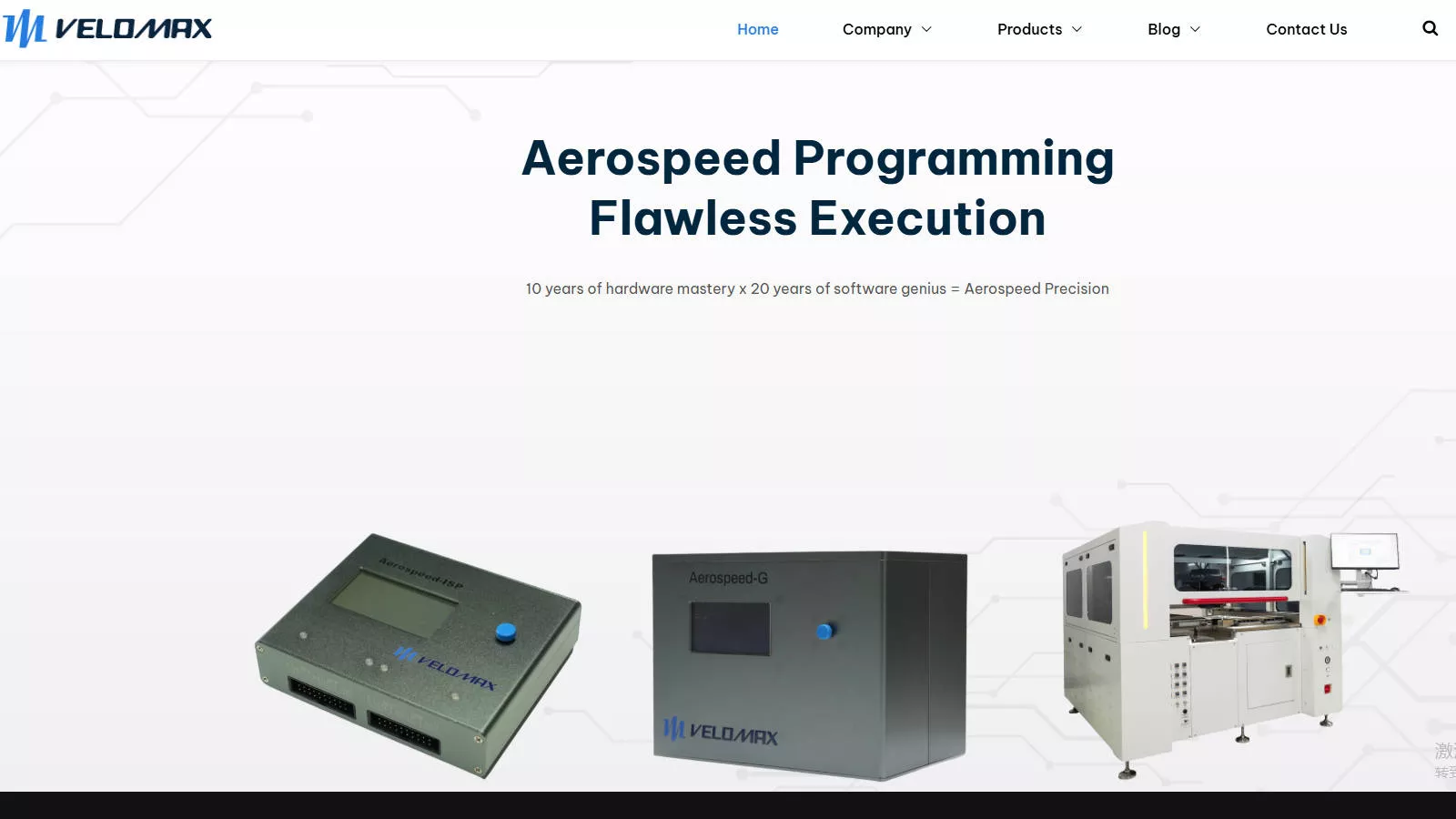
Different production stages demand tailored handling strategies. Rather than offering a one-size-fits-all product, VeloMax provides a complete IC programming technology ecosystem spanning engineering labs to high-volume smart factories.
| VeloMax Solution Line | Production Target Stage | Key Capabilities & Features | Primary Deployment Scenario |
|---|---|---|---|
| AST Series Automated Systems | Mass Production / Scale-up | High-UPH robotic handling, integrated AOI inspection, laser marking, Tape/Tray media changers, MES integration. | Automotive suppliers, Tier-1 EMS factories, OSAT packaging plants |
| VeloMax Manual Programmers | Engineering & Prototyping | Compact design, broad socket adapter ecosystem, high signal integrity, rapid setup software. | R&D labs, firmware debugging stations, low-volume pilot lines |
| VeloMax Programming Services | Outsourced / On-Demand | Turnkey device programming, quality verification, custom taping & reeling, zero CAPEX requirement. | Temporary volume spikes, specialized projects, unequipped lines |
Whether your manufacturing facility requires high-speed automated equipment like the VeloMax AST Series, flexible engineering programmers, or outsourced turnkey programming support, VeloMax serves as a long-term technology partner across every step of your production lifecycle.
Our technical team is available to help you evaluate your requirements and recommend the optimal programming solution for your production environment. Contact VeloMax Systems today to start the conversation.
Contact UsAs electronic architectures grow increasingly complex and memory densities expand into tens of gigabytes, device programming can no longer be handled by legacy manual methods. The shift toward high-volume automation is no longer just an operational upgrade—it is a critical requirement for maintaining yield, reducing costly labor overhead, and meeting stringent global quality standards. Implementing a modern automated IC programmer strategy boosts factory UPH, safeguards delicate chip packages from electrostatic and mechanical damage, eliminates firmware insertion errors, and provides the complete MES traceability required by modern electronics supply chains.
Selecting the right programming architecture requires balancing production volume, package geometries, bus writing speeds, and system flexibility. As an industry technology partner, VeloMax addresses every stage of the product lifecycle with a versatile IC programming ecosystem. Whether you are scaling up mass production with the high-throughput VeloMax AST Series automated systems, debugging early-stage prototypes using VeloMax Manual Programmers, or leveraging VeloMax On-Demand Programming Services to handle temporary volume surges, VeloMax provides tailored equipment and expertise. By aligning your operational goals with VeloMax's scalable programming solutions, semiconductor vendors, EMS providers, and OEMs can optimize manufacturing efficiency, guarantee zero-defect delivery, and keep their production lines future-ready.
An automated IC programmer is an industrial automated machine that picks unprogrammed integrated circuits from input media (trays, tape, or tubes), places them into specialized sockets to write firmware/data, performs 3D optical quality inspection, applies verification marks, and packages completed chips for automated SMT line feeding.
Key sectors include automotive electronics (ECUs, ADAS, infotainment), consumer electronics (smartphones, smart TVs), IoT devices, industrial automation controls, medical equipment, contract EMS assembly factories, and semiconductor OSAT packaging facilities.
Automated programmers utilize high-speed pick-and-place robotics and optical vision alignment to process thousands of chips per hour automatically without human touch errors or lead damage. Manual programmers require a human operator to swap chips manually, making them best suited for low-volume engineering development and prototype debugging.
Start by evaluating your target Units Per Hour (UPH), required chip package geometries (e.g., BGA, QFN, WLCSP), memory bus protocols (eMMC, UFS, MCU), programming write speed, optical inspection requirements, and factory MES connection capabilities.
Yes. Modern automated IC programmers feature ultra-high-bandwidth parallel programming backend controllers designed specifically to flash gigabytes of data onto high-density eMMC and UFS storage chips at maximum bus speed without creating production bottlenecks.
Our technical team is available to help you evaluate your requirements and recommend the optimal programming solution for your production environment. Contact VeloMax Systems today to start the conversation.
Contact Us
Discover this amazing content and share it with your network!
Your Name*
Your Email*


*We respect your confidentiality and all information are protected.
