
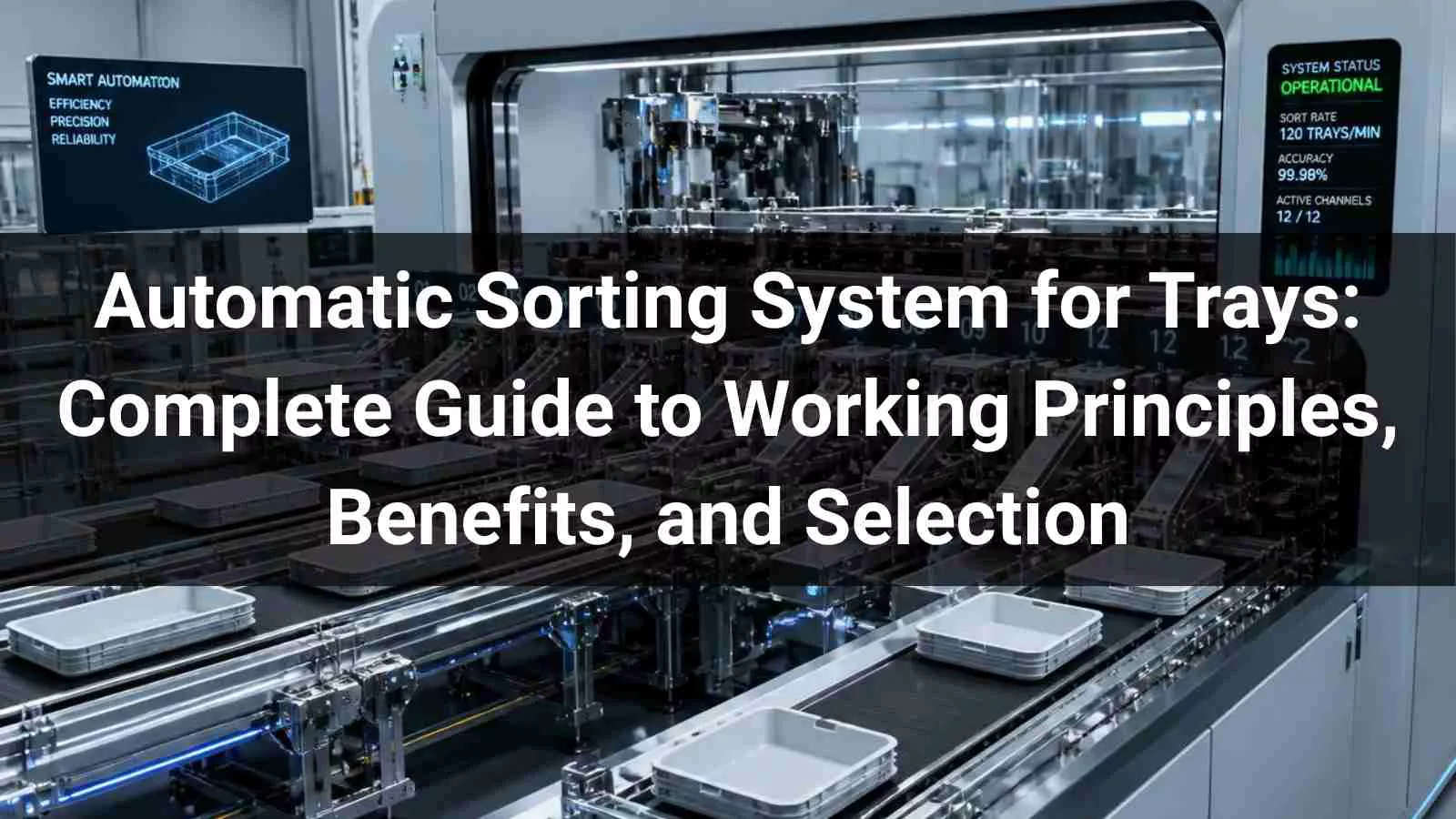
Manufacturers across different industries are increasingly adopting automation technologies to improve production efficiency, reduce manual operations, and maintain consistent workflow performance. In many production environments, trays are used to store, transport, and organize components throughout different manufacturing stages.However, when production volume increases, manually sorting and handling trays can become inefficient and difficult to manage.
An automatic sorting system for trays provides a practical solution by automatically identifying, classifying, and transferring trays according to predefined production requirements. By combining sensors, control systems, conveyors, and automated handling mechanisms, these systems help manufacturers achieve more stable material flow and improved production organization.
Today, automated tray sorting solutions are widely applied in industries that require accurate material handling, including electronics manufacturing, PCB production, automated assembly, and industrial automation.For companies evaluating automation upgrades, understanding how an automatic tray sorting system works and what factors should be considered before investment is essential.
1. What Is an Automatic Sorting System for Trays?
2. Main Functions of an Automatic Tray Sorting System
3. How Does an Automatic Tray Sorting System Work?
4. Key Components of an Automatic Sorting System for Trays
5. Applications of Automatic Tray Sorting Systems
6. Benefits of Using an Automatic Sorting System for Trays
7. How to Choose the Right Automatic Sorting System for Trays?
8. Why VeloMax Is a Reliable Partner for Automated Tray Sorting Solutions
10. Frequently Asked Questions (FAQ)
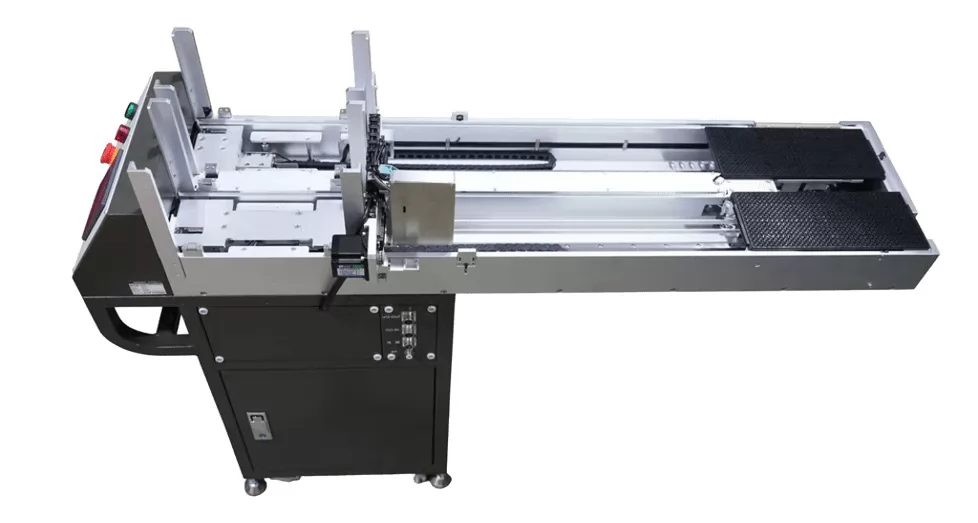
An automatic sorting system for trays is an industrial automation solution that automatically manages the identification, classification, and movement of trays within a production process. Unlike manual sorting operations, which require operators to inspect and move trays individually, automated systems use mechanical equipment and intelligent control technology to complete sorting tasks with greater consistency and speed.
A typical automatic tray sorting system consists of several integrated modules, including feeding mechanisms, detection systems, control units, transfer devices, and collection stations. The system receives trays from an upstream process, identifies relevant information, determines the correct sorting path, and transfers each tray to its assigned destination.
| Item | Description |
|---|---|
| Equipment Type | Industrial automation equipment designed for tray identification, sorting, and transfer |
| Main Function | Automatically classify and move trays according to production requirements |
| Core Technologies | Sensors, PLC control, conveyor systems, vision technology, and automated handling mechanisms |
| Common Applications | Electronics manufacturing, PCB production, assembly lines, and industrial material handling |
| Main Advantages | Improved sorting accuracy, higher efficiency, and reduced manual handling |
| Customization Options | Designed according to tray specifications, production layout, and workflow requirements |
An automatic tray sorting system performs several key functions to improve production organization and reduce manual handling requirements. These functions allow manufacturers to create smoother production workflows while maintaining consistent sorting performance.
| Function | Description |
|---|---|
| Automatic Tray Feeding | Introduces trays into the system and ensures stable positioning before sorting |
| Tray Identification | Uses sensors, cameras, or data systems to recognize tray information |
| Automated Classification | Determines sorting destinations based on programmed production rules |
| Transfer and Collection | Moves sorted trays to designated locations for the next process |
An automatic sorting system for trays operates through several coordinated stages, including tray feeding, identification, decision-making, sorting, and collection. Understanding the operational sequence illustrates why it offers unmatched speed and repeatability compared to manual handling.
The first step of an automated tray sorting system is introducing trays into the sorting area. The feeding system ensures that trays enter the equipment at a stable speed and correct position. Common feeding methods include conveyor-based feeding, stacking mechanisms, and automated transfer units.
After entering the sorting area, trays need to be identified before the system can make sorting decisions. Identification can utilize photoelectric and position sensors, industrial cameras and machine vision systems, or barcode readers and production data systems for complete tracking.
The control system acts as the central management unit. Most industrial tray sorting systems use PLC-based control technology to process information and determine sorting destinations, transfer timing, and workflow sequences based on predefined production rules.
Once confirmed, transfer mechanisms—such as conveyor diverters, push-type sorting units, or robotic handling systems—move the tray to the correct location and organize sorted trays for the next production stage.
An automatic sorting system for trays is a combination of multiple automation modules working together. Each component directly affects overall performance, reliability, and flexibility.
| Component | Main Function | Impact on Performance |
|---|---|---|
| Feeding and Conveyor System | Controls tray movement and maintains stable production flow | Improves operational stability and production continuity |
| Sensors and Vision System | Detects tray position, type, and production information | Improves sorting accuracy |
| PLC Control System | Controls equipment operation and communication between modules | Enables reliable automation and system integration |
| Sorting Mechanism | Transfers trays to assigned destinations | Determines sorting efficiency and flexibility |
| Handling Units | Performs positioning, lifting, or robotic movement | Supports customized production requirements |
Automated tray sorting equipment supports electronics manufacturing and material handling across several key technology sectors:
Our technical team is available to help you evaluate your requirements and recommend the optimal tray sorting solution for your production environment. Contact VeloMax Systems today to start the conversation.
Contact UsUpgrading from manual handling to an automatic tray sorting system provides measurable quality, efficiency, and operational benefits.
Automated systems eliminate human error, fatigue, and inconsistent judgment by adhering to precise programmed instructions and optical detection.
Continuous operation and faster sorting cycles significantly increase throughput while eliminating workflow bottlenecks.
Frees up human resources from repetitive tasks, allowing employees to focus on higher-value operations like quality inspection and equipment monitoring.
Connects seamlessly with factory control software as well as upstream and downstream machinery for superior material flow tracking.
To maximize investment return, production engineers and procurement managers should evaluate equipment against key selection criteria:
| Selection Factor | Key Questions for Buyers | Why It Matters |
|---|---|---|
| Tray Compatibility | Can the system handle existing tray sizes, materials, and product types? | Ensures stable operation and prevents handling issues |
| Sorting Speed | Does the equipment meet required production capacity and cycle time? | Determines whether the system supports manufacturing goals |
| Sorting Accuracy | Can the system maintain consistent identification and sorting performance? | Reduces production errors and improves reliability |
| System Integration | Can it connect with existing production equipment and control systems? | Improves automation efficiency and scalability |
| Customization Capability | Can the supplier modify the system according to specific requirements? | Helps meet unique production conditions |
| Supplier Experience | Does the supplier provide engineering support and technical service? | Reduces long-term operational risks |
VeloMax develops automated tray sorting solutions designed for industrial applications where sorting accuracy, production stability, and workflow efficiency are critical. By combining mechanical design, control technology, and production workflow analysis, VeloMax delivers tailored automation systems tailored to actual manufacturing conditions.
| Capability | Value for Manufacturers |
|---|---|
| Customized System Design | Solutions can be adapted to different tray sizes, production workflows, and application requirements |
| Automation Integration | Systems can be designed to connect with existing production equipment and processes |
| Efficient Tray Handling | Helps optimize material flow and reduce unnecessary manual operations |
| Application-Based Solutions | Equipment design focuses on actual manufacturing requirements rather than a standard one-size-fits-all approach |
To learn more about how VeloMax can help upgrade your production line, explore the detailed VeloMax Automated Tray Sorting System solution.
Our technical team is available to help you evaluate your requirements and recommend the optimal tray sorting solution for your production environment. Contact VeloMax Systems today to start the conversation.
Contact UsAn automatic sorting system for trays has become an important solution for manufacturers seeking better production efficiency, sorting accuracy, and workflow stability. By combining automated feeding, detection technology, control systems, and handling mechanisms, these systems help companies create more organized and flexible production processes. When selecting a tray sorting solution, manufacturers should consider factors such as tray compatibility, system integration, customization capability, and supplier experience. The right tray sorting automation solution should not only solve current production challenges but also support future manufacturing development. For companies looking to improve tray handling automation, VeloMax provides high-performance automated tray sorting solutions designed around different industrial requirements, helping manufacturers optimize material flow and maximize production performance.
An automatic sorting system for trays is an industrial automation solution designed to identify, classify, and transfer trays according to predefined production requirements through integrated feeding, sensing, PLC control, and sorting mechanisms.
It improves efficiency by reducing repetitive manual operations, minimizing sorting errors, cutting down handling cycle times, and maintaining a stable, continuous material flow.
Key sectors include electronics manufacturing, PCB assembly, automated industrial component handling, packaging lines, and high-precision manufacturing facilities.
Yes. Systems can be customized regarding conveyor configurations, mechanical sorting mechanisms, control functions, and integration interfaces to suit specific tray dimensions and factory layouts.
Evaluate suppliers based on engineering experience, customization capabilities, system integration expertise, equipment reliability, and long-term technical service.
Our technical team is available to help you evaluate your requirements and recommend the optimal tray sorting solution for your production environment. Contact VeloMax Systems today to start the conversation.
Contact Us
Discover this amazing content and share it with your network!
Your Name*
Your Email*


*We respect your confidentiality and all information are protected.
